
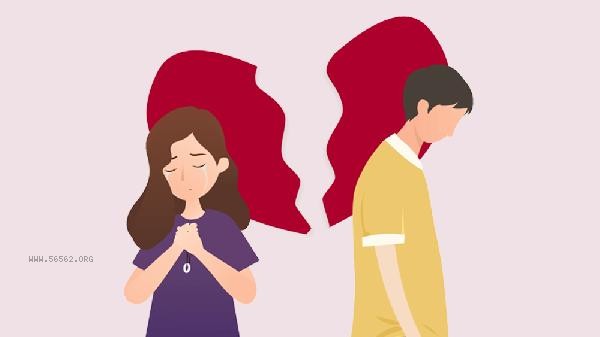
The rising divorce rate among young people is closely related to factors such as social pressure, changes in marriage and love concepts, and increased economic independence. The decline in marital stability is mainly affected by five aspects: changes in individual value orientation, weakening of family functions, simplification of legal procedures, influence of social media, and reduced intergenerational support.
1. Transformation of Individual Value Orientation
Contemporary young people place greater emphasis on self actualization and emotional satisfaction, and have significantly higher requirements for marital quality. When conflicts arise in intimate relationships, there is a tendency to choose to end the relationship rather than compromise and maintain it. The popularization of individualism has made divorce no longer stigmatized, especially among highly educated individuals who are more likely to view divorce as a rational choice.
2. Weakening of Family Functions
Traditional family functions such as economic mutual assistance, childcare, and elderly care are gradually being replaced by socialized services. Under the dual employment model, the contradiction in the distribution of household chores has intensified, and some marriages have broken down due to conflicts in parenting concepts or pressure to support the elderly. The core family structure results in a lack of a family support system to buffer conflicts between spouses.
3. Simplification of Legal Procedures
Prior to the implementation of the cooling off period system for divorce, the procedures for divorce by agreement were relatively convenient. After the revision of the Marriage Law, the rules for property division have become clearer, reducing the cost of divorce decision-making. Some young people see divorce as a standard option for resolving conflicts and lack the patience to repair relationships.

4. The Influence of Social Media
Social media amplifies the comparative psychology in marriage, and some people are disappointed due to unrealistic expectations of their partners. Virtual social networking provides emotional alternatives, and online ambiguity may trigger real-life marital crises. The public discussion on divorce has also changed people's cognitive framework towards marriage.
5. Decreased Intergenerational Support
The older generation's intervention in their children's marriages has decreased, and younger couples have received less emotional guidance and conflict resolution. In the process of urbanization, the geographical isolation between native and new families further weakens the stabilizing role of traditional families in marriage.

It is recommended that young people engage in sufficient communication and marriage counseling before marriage, establish common life goals and conflict resolution mechanisms. Regularly engage in emotional communication after marriage, allocate family responsibilities reasonably, and seek professional psychological counseling when necessary. Society should provide more marriage education resources and psychological support services to help young people establish healthy attitudes towards marriage and love. Maintaining a marriage requires both parties to grow together and cultivate a sense of family responsibility while respecting individual needs.








Comments (0)
Leave a Comment
No comments yet
Be the first to share your thoughts!