
Chinese medicine treatment of asthma mainly includes life intervention, oral administration of Chinese medicine, acupuncture and moxibustion therapy, acupoint application, massage and other methods. Asthma is often triggered by external pathogenic invasion, phlegm retention, emotional disorders, and other factors, manifested as symptoms such as wheezing, shortness of breath, and chest tightness. It needs to be treated based on individual constitution differentiation.
1. Life Intervention
Adjusting diet and daily life is the foundation of traditional Chinese medicine treatment for asthma. Avoid consuming raw, cold, greasy, and allergenic foods such as seafood, cold drinks, etc. Moderate consumption of ingredients such as white radish, lily, almond, etc. that moisten the lungs and reduce phlegm. Maintain a ventilated and dry living environment to reduce exposure to allergens such as dust mites and pollen. Moderately engage in soothing exercises such as Eight Section Brocade and Tai Chi to enhance lung health. Emotionally, one should avoid worries and anger, and maintain emotional stability.
2. Oral administration of traditional Chinese medicine
Select prescriptions based on syndrome differentiation and typing. Cold asthma can be treated with modifications of Shegan Mahuang Tang, which contains roasted Mahuang and Xixin as medicines for dispersing cold in the lungs. Hot asthma is suitable for Dingchuan Tang, which contains ingredients such as Huangqin and Mulberry White Skin that clear heat and phlegm. The commonly used formula for treating asthma is Yupingfeng Powder combined with Shengmai Yin, which contains lung and spleen tonifying drugs such as Huangqi and Atractylodes macrocephala. During the attack period, traditional Chinese patent medicines and simple preparations such as Xiaoqinglong Granules and Gejie Dingchuan Capsules can be used to relieve symptoms, and Guben Kechuan Tablets can be used to regulate physique during the remission period. Traditional Chinese medicine practitioners need to adjust medication based on tongue and pulse conditions.
3. acupuncture and moxibustion therapy
Select the main points of Feishu, Dingchuan, Tanzhong and point differentiation. Cold asthma is treated with moxibustion on the vertebrae and air ducts, while hot asthma is treated with moxibustion on Shaoshang and Qize to remove blood. For weak asthma, moxibustion is applied on Zusanli and Guanyuan. Use the technique of tonifying and purging, and leave the needle on for 20-30 minutes. Acupuncture and moxibustion can be performed once a day in acute attack period and 2-3 times a week in remission period. Modern research shows that acupuncture and moxibustion can regulate the level of immunoglobulin E and reduce airway hyperresponsiveness. Combined with electroacupuncture or warm acupuncture and moxibustion can enhance the curative effect.
Fourth, Acupoint Application
Sanfu Tie is a typical representative, which grinds and pastes drugs such as mustard seed and Asarum, and applies them to acupoints such as Feishu and Gaoyao. Apply once at the beginning, middle, and end of summer for 4-6 hours each time. Winter Jiu Tie uses warm medicine and can be applied continuously for 3 years. Acupoint application stimulates skin penetration and regulates the balance of Th1/Th2 cells. People with sensitive skin should shorten the application time and remove it promptly if there is burning pain.
Fifth, Tuina Massage
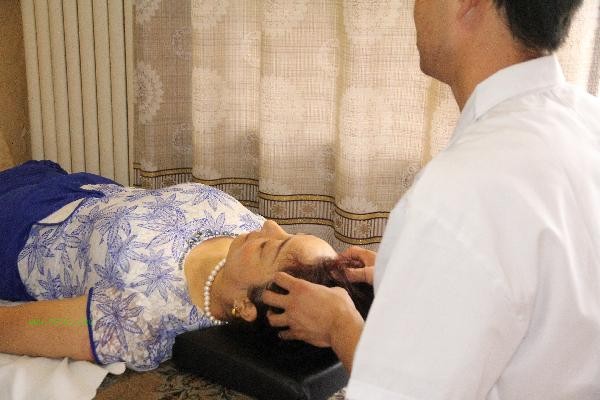
uses techniques such as opening the Tianmen Gate and pushing the Kan Palace, combined with back bladder meridian massage. Pressing the Tian Tu and Shan Zhong acupoints can reduce stress and relieve asthma, while massaging the Feng Long acupoint can reduce phlegm and dispel dampness. Children with asthma can be treated with spinal therapy by lifting and pinching the skin 3-5 times along the Du meridian from bottom to top. Tuina can relax bronchial smooth muscle and improve lung ventilation function. It should be performed during the non acute attack period, once a day, with 10 sessions as one course of treatment. Do not use during periods of skin damage or high fever. Traditional Chinese medicine treatment for asthma should adhere to the principle of treating both symptoms and root causes. During the attack period, symptom control should be the main focus, while during the relief period, emphasis should be placed on strengthening the body and consolidating the foundation. It is recommended that patients record the triggering factors and avoid exposure to allergens. The diet should be light and soft. You can often drink Arhat fruit tea or orange peel water. Moderately engage in breathing exercises, with a focus on practicing pursed lip breathing and abdominal breathing. Pay attention to keeping your neck and back warm in winter, and carry emergency medication with you. If there is a crisis such as cyanosis of the lips and blurred consciousness, seek medical attention immediately. Regular follow-up of lung function and integrated traditional Chinese and Western medicine treatment can improve long-term efficacy.





Comments (0)
Leave a Comment
No comments yet
Be the first to share your thoughts!