
Trigeminal neuralgia can be treated by traditional Chinese medicine conditioning, acupuncture and moxibustion, massage, acupoint application, cupping, etc. Trigeminal neuralgia may be related to factors such as invasion of wind and cold, stagnation of qi and blood, hyperactivity of liver yang, obstruction of phlegm and dampness, and excessive yin deficiency and fire. It usually manifests as paroxysmal severe pain in the face, pain like cutting, and worsening symptoms when exposed to cold.

1. Traditional Chinese Medicine Treatment
For the invasion type of wind and cold, Chuanxiong tea can be used to adjust the powder, containing ingredients such as Chuanxiong, Bai Zhi, and Xi Xin, which can help dispel wind and dispel cold. The blood stasis type can be treated with Xuefu Zhuyu Tang, which contains peach kernels, red flowers, Angelica sinensis, etc., and can promote blood circulation and remove blood stasis. The liver yang hyperactivity type is suitable for Tianma Gouteng granules, which contain Tianma, Gouteng, Shixianming, etc., and can calm the liver and latent yang. Recommended for phlegm and dampness blocking type is Er Chen Wan, which contains Pinellia ternata, Chenpi, Poria cocos, etc., and can dissolve phlegm and dispel dampness. The Yin deficiency and fire excess type can be treated with Zhibai Dihuang Wan, which contains Zhimu, Huangbai, Rehmannia glutinosa, etc., and can nourish Yin and reduce fire.
2. acupuncture and moxibustion treatment
The main points are Xiaguan, Buche, Hegu, etc., and the matching points are added or subtracted according to the syndrome type. The wind cold type plus wind pool and outer pass adopts warm needle moxibustion. Qi and blood stasis type with blood sea and three yin interaction, stimulated by the method of diarrhea. Liver yang hyperactivity type combined with Tai Chong and inter row, combined with blood letting by puncturing the collaterals. Phlegm dampness type combined with Feng Long and Yin Ling Quan, using the method of tonifying and purging. For Yin deficiency type, add Tai Xi and Zhao Hai, use the method of tonifying and leaving needles. Each treatment lasts 20-30 minutes, with 10 sessions constituting one course of treatment.
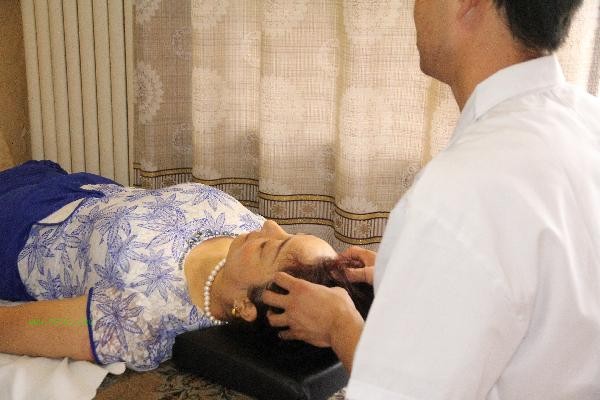
3. Tuina massage
uses one finger Zen pushing method to act on facial acupoints such as Sun, Zanzhu, and Sibai, pressing each acupoint for 1-2 minutes. Massage the Foot Yangming Stomach Meridian and Foot Shaoyang Gallbladder Meridian along the meridians, and coordinate with acupoints such as Fengchi and Shoulder Well. For those with stagnation of qi and blood, massage the neck and shoulder muscles. For those with liver yang hyperactivity, focus on pressing the Taichong acupoint. The intensity of the operation should be increased from light to heavy, based on the patient's tolerance. Evaluate the effect once a day after 10 sessions.

4. Acupoint application
Grind white mustard seed, Corydalis yanhusuo and other drugs into powder, mix ginger juice into a paste, and apply it to the affected side's Xiaguan and Jiache acupoints. For wind cold type, cinnamon powder can be used in combination with mugwort oil for external application, while for qi and blood stasis type, Sanqi powder and safflower oil can be mixed. Apply for 4-6 hours each time to shorten the time for sensitive skin. After applying the patch, there may be slight fever or redness in the local area, which is a normal reaction. Avoid prolonged application time that may cause skin burns.
5. Cupping therapy
involves walking the cupping in the pain radiating area, with a focus on leaving the cupping at acupoints such as the zygomatic region and Dicang for 5-10 minutes. The wind cold type is combined with the bladder meridian cupping on the back, while the liver yang hyperactivity type involves needling and cupping at the Gan Shu acupoint. Apply an appropriate amount of lubricating oil before operation to avoid skin damage. After cupping, purple red can marks may appear, which usually disappear within 3-5 days. Individuals with weak physical constitution should use the flash jar method and should not keep the jar for too long. 2-3 times a week, with 4 weeks as one course of treatment. During traditional Chinese medicine treatment, it is necessary to avoid catching a cold on the face and avoid eating spicy and irritating foods. Maintain emotional stability and avoid overexertion. During acute attacks, ice therapy can be used to relieve pain, but direct contact with the skin should be avoided. Record the time of pain onset, triggering factors, and relief methods for doctors' reference during follow-up visits. If there is no improvement or new symptoms such as facial numbness after 2 weeks of treatment, timely follow-up should be conducted to adjust the plan. Long term patients are advised to combine soothing exercises such as Ba Duan Jin and Tai Chi to regulate qi and blood.






Comments (0)
Leave a Comment
No comments yet
Be the first to share your thoughts!