
Trigeminal neuralgia can be relieved by taking Chinese medicine orally, acupuncture and moxibustion, massage, acupoint application, cupping, etc. Trigeminal neuralgia may be related to factors such as wind and cold invasion, liver yang hyperactivity, qi stagnation and blood stasis, phlegm turbidity obstructing collaterals, yin deficiency and excessive fire. It is usually manifested as paroxysmal severe pain on the face, pain such as knife cutting, and fixed or wandering pain.

1. Oral administration of traditional Chinese medicine
For the wind cold invasion type, Chuanxiong tea adjustment powder can be selected with modifications, containing ingredients such as Chuanxiong, Baizhi, and Xixin, which can dispel wind, dispel cold, and relieve pain. The liver yang hyperactivity type can be treated with Tianma Gouteng granules, which contain Tianma, Gouteng, Shixianming, etc., and have the effect of calming the liver and suppressing yang. The recommended formula for Qi stagnation and blood stasis type is Xuefu Zhuyu Capsule, which contains ingredients such as peach kernels, safflower, and Angelica sinensis that promote blood circulation and remove blood stasis. The phlegm turbidity obstructing collaterals type is suitable for Banxia Baizhu Tianma Tang, which contains medicinal herbs such as Banxia, Baizhu, Tianma, etc. for resolving phlegm and promoting collaterals. It is recommended to take Zhibai Dihuang Pills for Yin deficiency and Fire excess type, which contain nourishing Yin and reducing fire medicines such as Zhimu, Huangbai, and Rehmannia glutinosa.
2. acupuncture and moxibustion and moxibustion treatment
The main points are Xiaguan, Buche, Hegu and other facial points, together with distal points such as Taichong and Yanglingquan. The wind cold type plus moxibustion on Dazhui and Fengchi adopts warm needle moxibustion. The key acupuncture points for the liver yang hyperactivity type are Taixi and Xingjian, and the laxative method is used. Qi stagnation and blood stasis type can be treated by puncturing the collaterals and bleeding at pain points, combined with electroacupuncture and sparse wave stimulation. For phlegm turbidity type, select acupoints such as Fenglong and Zhongwan, and use the technique of tonifying and purging. The Yin deficiency type uses acupoints such as Shenshu and Sanyinjiao, and employs the method of tonifying and retaining needles.
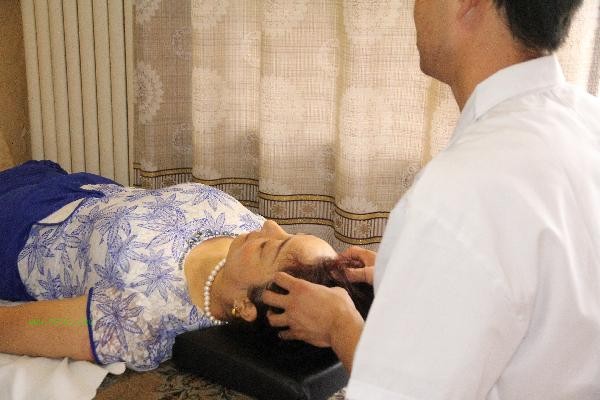
3. Massage
The face is operated along the branches of the trigeminal nerve using a one finger Zen pushing method, with a focus on pressing acupoints such as the zygomatic and four white areas. Use the pinching technique to release the muscles in the neck area from the windpit to the shoulder well. For patients with liver yang hyperactivity, the Bridge Arch acupoint can be pushed and combined with the head sweeping and dispersing method. Qi stagnation and blood stasis type: Apply kneading and rubbing techniques to the painful area, gradually increasing the intensity from mild to severe. Phlegm turbidity type combined with abdominal massage technique promotes the transformation of spleen and stomach. The Yin deficiency type adopts the kidney area rubbing method, combined with the point pressing of Yongquan acupoint.

4. Acupoint application
For the wind cold type, you can apply powdered ginger juice such as mustard seed and asarum to the temples. For the liver yang hyperactivity type, Wu Zhuyu powder vinegar is used to apply to the Yongquan acupoint. Qi stagnation and blood stasis type are treated by applying a mixture of Sanqi powder and ligustrazine to the pain points. For phlegm turbidity type, apply Banxia and Nanxingmo egg white to Fenglong acupoint. For the Yin deficiency and Fire excess type, apply Zhimu, Huangbai powder, and honey to the Shenshu acupoint. The application time should be controlled within 4-6 hours, and those with sensitive skin should shorten the time.
5. Cupping therapy
For wind cold type, cupping is performed through the bladder meridian on the back, with a focus on leaving cupping in the area from Dazhu to Geshu. The liver yang hyperactivity type involves needling and cupping at the Gan Yu and Dan Yu acupoints. Qi stagnation and blood stasis type can be treated with the flashing cupping method at the back shu acupoint corresponding to pain. For phlegm turbidity type, select the Spleen Shu and Stomach Shu acupoints and leave them in jars. Yin deficiency type can be treated with warm water tanks at the Shen Shu and Zhi Shi acupoints. The cupping force should be measured by local flushing, and should be used with caution for patients with coagulation dysfunction. Patients with trigeminal neuralgia should avoid direct cold air blowing on their face in daily life and wear masks when going out in winter. Maintain emotional stability and avoid anxiety and tension that can trigger pain. The diet should be light, avoid spicy and stimulating food, drink ginger tea appropriately for wind cold type, and Broth of white fungus is recommended for yin deficiency type. During the onset of pain, a warm towel can be applied to the face, combined with gentle facial massage. Pay attention to regular sleep patterns, ensure sufficient sleep, and engage in moderate soothing exercises such as Ba Duan Jin and Tai Chi. If the pain continues to worsen or new symptoms appear, it is necessary to promptly seek medical attention and follow-up at a traditional Chinese medicine or pain department.






Comments (0)
Leave a Comment
No comments yet
Be the first to share your thoughts!