
The traditional Chinese medicine treatment of trigeminal neuralgia can be relieved by acupuncture and moxibustion, herbal decoction, massage, acupoint application and ear point pressing. Trigeminal neuralgia may be related to factors such as invasion of wind and cold, stagnation of qi and blood, and hyperactivity of liver yang. It usually manifests as paroxysmal severe pain in the face and pain induced by touch.
I. acupuncture and moxibustion
acupuncture and moxibustion is a common method of traditional Chinese medicine for trigeminal neuralgia, which dredges the meridians by stimulating Hegu, Bucha Che, Xiaguan and other acupoints. For wind cold type pain, moxibustion can be used to warm the meridians and dispel cold, while for liver yang hyperactivity type, acupoints such as Taichong and Fengchi can be used to calm the liver and dispel yang. Electroacupuncture is commonly used in clinical practice to enhance stimulation, and it should be operated by professional physicians to avoid self needling.
II. Traditional Chinese Medicine Soup
For the wind cold attacking collaterals syndrome, Chuanxiong tea can be adjusted and modified to contain wind dispelling and cold dispersing drugs such as Chuanxiong and Bai Zhi. The blood stasis type is suitable for Xuefu Zhuyu Tang, which contains ingredients such as peach kernels and red flowers that promote blood circulation and remove blood stasis. For liver fire inflammation syndrome, Tianma Gouteng drink is used, which contains medicinal herbs such as Tianma and Gouteng to calm the liver and dispel wind. It is necessary to adjust the compatibility according to individual syndrome types to avoid long-term use of bitter and cold medicines such as gentian herb that can damage the spleen and stomach.
III. Tuina
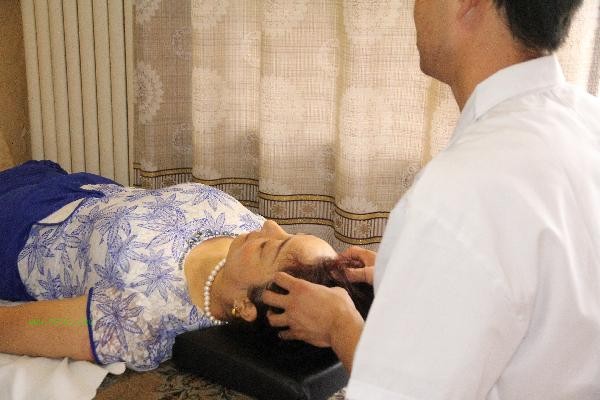
Meridian massage can relieve muscle spasms, with a focus on pressing facial acupoints such as the zygomatic region and the sun. Cooperate with remote acupoint selection, such as strengthening the spleen and nourishing qi in Zusanli, and use gentle techniques to avoid stimulating trigger points. Red flower oil can be used to assist in promoting blood circulation before massage, but it is contraindicated for those with damaged skin. Suggest 2-3 times a week, with 10 times as one course of treatment.
Fourthly, acupoint application
involves grinding and applying drugs such as mustard seed and Corydalis yanhusuo to the Xiaguan acupoint on the affected side, exerting analgesic effects through transdermal absorption. People with sensitive skin should try it on a small scale first, and stop using it immediately if there is a rash. In winter, infrared radiation can be used to enhance the efficacy of the medication, with each application lasting no more than 4 hours.
5. Ear acupressure
Select the corresponding areas of the ear canal, cheeks, etc., and use Wangbuliuxing seed paste to press and stimulate them. The patient can maintain the stimulation level by self pressing 3-5 times a day, and after 3 days of unilateral compression, the contralateral ear should be replaced. This method is suitable as an adjuvant therapy and should be used with caution by pregnant women and patients with ear eczema. During traditional Chinese medicine treatment, it is necessary to avoid direct cold air blowing on the face and avoid eating spicy and irritating foods. During the attack period, a hot towel can be applied to the painful area, with a temperature not exceeding 50 ℃. Maintain a regular daily routine, emotional fluctuations may trigger pain, and emotional regulation can be achieved through soothing exercises such as Ba Duan Jin. If the pain continues to worsen or facial numbness occurs, timely follow-up examination should be conducted to rule out intracranial lesions.





Comments (0)
Leave a Comment
No comments yet
Be the first to share your thoughts!