
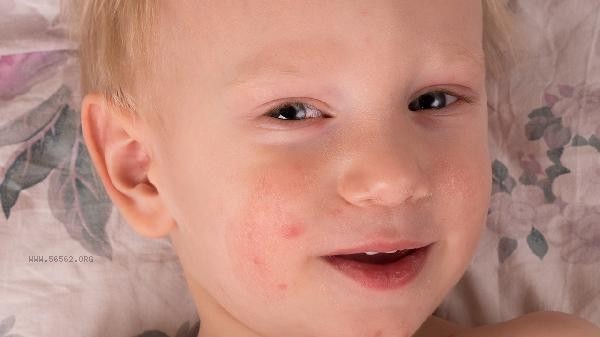
Urticaria can be treated by taking Chinese medicine orally, acupuncture and moxibustion therapy, cupping therapy, acupoint application, diet conditioning, etc. Urticaria is usually caused by invasion of wind pathogens, accumulation of damp heat, blood deficiency and wind dryness, emotional disorders, external stimuli, and other reasons.
1. Oral administration of traditional Chinese medicine
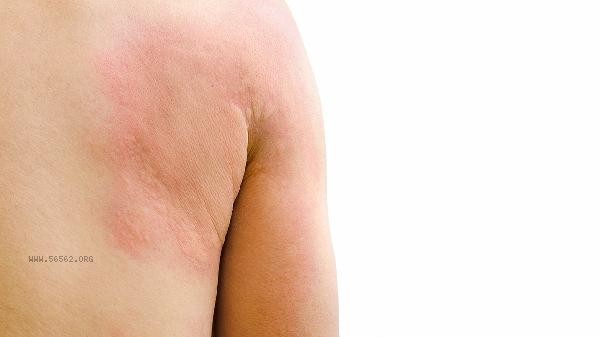
Urticaria patients can use Xiaofeng Powder, Fangfeng Tongsheng Pill, Yupingfeng Granules and other traditional Chinese patent medicines and simple preparations under the guidance of Chinese medicine practitioners. Xiaofeng Powder is suitable for wind heat urticaria, characterized by a red rash, burning sensation, and itching. Fangfeng Tongsheng Pill is effective in treating wind cold urticaria, with common white rashes that worsen when exposed to cold. Yupingfeng granules are suitable for those with superficial weakness and often accompanied by symptoms of self sweating and bad wind. Traditional Chinese medicine decoctions need to be treated based on individual syndrome differentiation, and common formulas include Guizhi Tang, Ma Huang Gui Zhi Bu Tang, etc.
2. acupuncture and moxibustion therapy
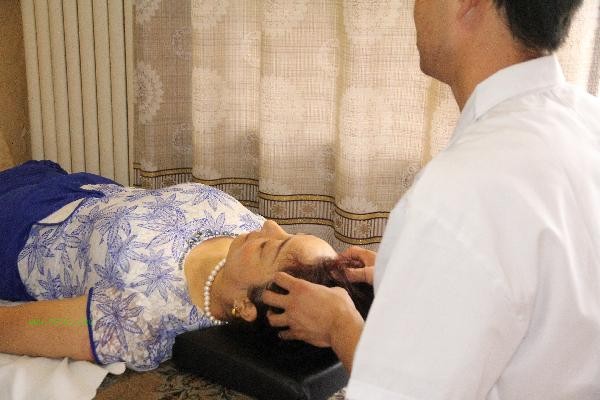
acupuncture and moxibustion selects Quchi, Xuehai, Sanyinjiao and other main points, together with Fengchi, Hegu and other matching points. The wind heat syndrome can be treated with acupuncture at the Dazhui acupoint, while the wind cold syndrome can be treated with moxibustion at the Shenque acupoint. In the acute phase, the laxative method is used, while in the chronic phase, the tonifying method or the flat tonifying and flat laxative method is used. Leave the needle on for 20 minutes each time, treat once every other day, and 10 times constitute one course of treatment. Ear acupuncture can be applied to acupoints such as the lungs, adrenal glands, and endocrine system to compress the seeds of Wang Bu Liu Xing.
3. Cupping therapy [SEP]: Walking through the bladder meridian on the back can clear the meridians, and leaving a cupping at the Dazhui acupoint can help dispel wind and relieve external pressure. The use of flash cupping method along the Du meridian and Jiaji acupoint has a good effect on stubborn urticaria. Caution: Do not use in areas of skin damage, and use with caution for individuals with coagulation dysfunction. After treatment, it is necessary to avoid wind and keep warm, and it is not advisable to bathe within 6 hours. It is recommended to treat twice a week, with 4 weeks as one course of treatment.
4. Acupoint application
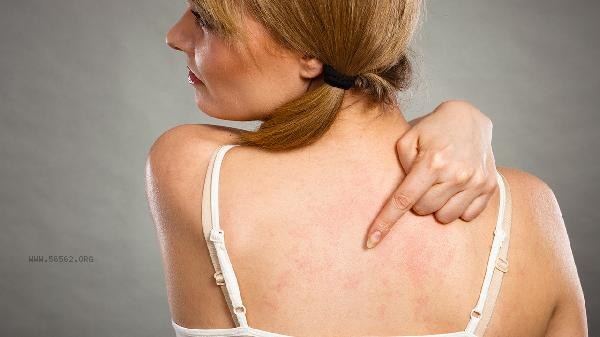
Apply traditional Chinese medicine powder mixed with vinegar to the Shenque acupoint. Common medicines include Bai Xianpi, Di Fuzi, Sophora flavescens, etc. During the dog days of summer, the method of applying patches for treating winter diseases is adopted, and the back shu points such as Fei Shu and Pi Shu are selected. People with sensitive skin should try it on a small area first, and if there is burning pain, it should be removed immediately. Apply for 4 hours each time, twice a week, and visible effects for 3 consecutive weeks. Avoid eating spicy substances during the application period.
5. Dietary Adjustment
For wind heat type, it is recommended to eat heat clearing foods such as mung beans and winter melon, while for wind cold type, ginger and perilla can be consumed in moderation. People with blood deficiency should eat more blood tonifying products such as red dates and black sesame seeds. For those with damp heat constitution, it is necessary to reduce the fat, sweet and rich taste. During acute attacks, avoid eating fish, shrimp, crabs, and other substances. Chronic patients should avoid alcohol and foods containing preservatives. It is recommended to use Tonic Diet such as purslane Congee, coix seed and red bean soup for auxiliary conditioning. Patients with urticaria should wear loose cotton clothing to avoid scratching the skin. Maintain a ventilated and dry living environment, and regularly clean bedding. The temperature of the bath water should not be too high, and the use of alkaline bath products should be reduced. Keep a diet diary to identify allergens, maintain a regular sleep routine, and maintain emotional stability. If the symptoms persist or are accompanied by chest tightness and difficulty breathing, seek medical attention immediately. Patients with chronic urticaria should adhere to completing the traditional Chinese medicine treatment course and cooperate with moderate exercise to enhance their physical fitness.





Comments (0)
Leave a Comment
No comments yet
Be the first to share your thoughts!