
TCM treatment of Parkinson's disease mainly involves comprehensive intervention through Chinese medicine conditioning, acupuncture and moxibustion therapy, massage, Qigong guidance and diet. Parkinson's disease belongs to the category of "tremor syndrome" in traditional Chinese medicine, which is often caused by liver and kidney deficiency, insufficient qi and blood, or internal movement of wind and yang. Traditional Chinese medicine treatment focuses on the combination of overall regulation and symptom relief.

1. Traditional Chinese Medicine Treatment
Traditional Chinese medicine often uses formulas that nourish the liver and kidneys, eliminate wind and unblock collaterals, such as Tianma Gouteng Yin, Liuwei Dihuang Wan, etc. Tianma Gouteng Drink can calm the liver and dispel wind, suitable for patients with obvious limb tremors; Liuwei Dihuang Pill can nourish yin and kidney, improve dizziness and vertigo caused by liver and kidney yin deficiency. Traditional Chinese medicine should be treated based on individual syndrome differentiation. Common syndrome types include liver and kidney yin deficiency, qi and blood deficiency, and phlegm heat dynamic wind type, which need to be adjusted by traditional Chinese medicine practitioners.
2. acupuncture and moxibustion therapy
acupuncture and moxibustion selects Baihui, Fengchi, Hegu and other acupoints to regulate the movement of qi and blood by stimulating the meridians. Head acupuncture therapy can improve blood circulation in the brain, while body acupuncture targets limb stiffness or tremors. Electroacupuncture therapy combined with low-frequency electrical stimulation can enhance neural regulation function. Acupuncture and moxibustion needs to be persisted for a long time, 3-5 times a week, and some patients can cooperate with moxibustion to warm and unblock the channels.
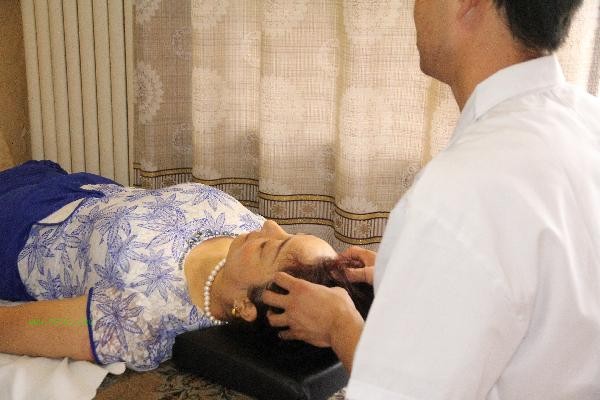
3. Tuina Massage
Tuina aims to relieve muscle tension by using rolling and kneading methods to relieve muscle spasms, with a focus on treating neck, shoulder, and limb muscle groups. Acupoint massage, such as tapping on Taichong and Yanglingquan, can soothe the liver and calm the wind. Family members can learn simple techniques to help patients with daily massage, but they need to avoid excessive stimulation that can cause muscle damage.

4. Qigong guidance
Traditional techniques such as Eight Section Brocade and Five Animal Play regulate yin-yang balance through slow movements combined with breathing. Standing exercises can help enhance lower limb strength and improve gait instability. Qigong emphasizes the guidance of thoughts and should be done gradually under professional guidance to avoid falls caused by balance disorders.
5. Dietary regulation
The principle of diet is to nourish yin and retain yang. It is recommended to consume foods that nourish the liver and kidneys, such as black sesame, walnuts, and yams. Avoid spicy and hot foods, and increase the intake of coarse grains rich in vitamin B in moderation. It can be used in combination with Tonic Diet, such as stewed black bone chicken with astragalus, lily lotus seed soup, etc., but it needs to be selected according to the syndrome differentiation of constitution.

Traditional Chinese medicine treatment for Parkinson's disease needs to be coordinated with modern medical protocols, and patients should have regular follow-up visits to adjust medication. Maintain emotional stability in daily life, avoid overexertion, and engage in moderate joint activity training. Family members should pay attention to the patient's movement safety, reduce obstacles in the home environment, and use assistive walking tools if necessary. If symptoms worsen or complications such as difficulty swallowing occur, timely medical evaluation should be sought.





Comments (0)
Leave a Comment
No comments yet
Be the first to share your thoughts!