
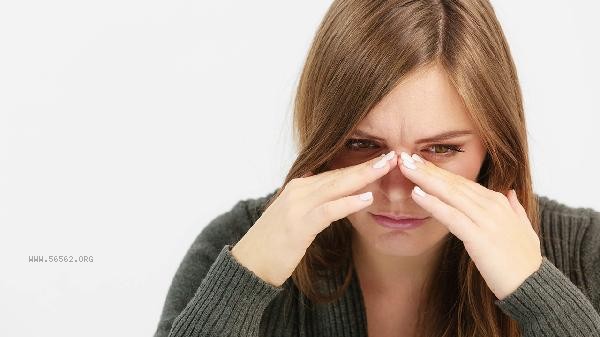
The traditional Chinese medicine treatment of sinusitis mainly includes oral Chinese medicine, acupuncture and moxibustion, acupoint application, cupping, massage and other methods. Sinusitis in traditional Chinese medicine is often caused by external factors such as wind and cold, deficiency of lung and spleen qi, and damp heat in the liver and gallbladder. It manifests as symptoms such as nasal congestion, purulent nasal discharge, and headache.

1. Oral administration of traditional Chinese medicine
Traditional Chinese medicine commonly uses formulas such as Xinyi Qingfei Yin, Cang'er Zi San, Chuanxiong Tea Tiao San, etc. for the treatment of sinusitis. Xinyi Qingfei Yin is suitable for patients with lung meridian wind heat type sinusitis, which can alleviate nasal congestion and yellow purulent nasal discharge. Cang Er Zi San is mostly used for wind cold attacking lung type, which can dispel cold and promote the circulation of orifices. The damp heat type of liver and gallbladder can be treated with modified Longdan Xiegan Tang, which needs to be diagnosed and treated by a traditional Chinese medicine practitioner based on syndrome differentiation. It is recommended to use a clay pot when boiling traditional Chinese medicine to avoid reacting with metal utensils.
2. acupuncture and moxibustion therapy
acupuncture and moxibustion selects Yingxiang, Yintang, Hegu and other acupoints, and adopts the method of reinforcing and reducing. Acupuncture and moxibustion can be performed once a day in the acute phase, once every other day in the chronic phase, and 10 times is a course of treatment. Yingxiang acupoint is located 0.5 inches away from the nose, and acupuncture can directly improve nasal ventilation. The Yin Tang acupoint is located between the eyebrows and has the effect of unblocking the body and awakening the mind. For those with physical weakness, moxibustion can be added to the Zusanli area to strengthen the body and dispel evil.
3. Acupoint application
Grind and paste drugs such as mustard seed and Asarum, and apply them to acupoints such as Dazhui and Feishu. The drug is absorbed through the skin to exert a warming and unblocking effect, and is applied for 4-6 hours each time. For those with sensitive skin, the time should be shortened. The application effect is better during the summer dog days, and can be combined with oral Chinese medicine to enhance the therapeutic effect. Local redness after application is a normal reaction, and if blisters appear, they should be treated promptly.

4. Cupping therapy
involves walking or leaving a bladder canal in the back, with a focus on acupoints such as Feishu and Fengmen. Push up and down along both sides of the spine while walking until the skin is flushed. Keeping the jar for 5-10 minutes can clear the meridians, promote lung circulation, and open the orifices. Individuals with weak physical constitution should use the flash can method to avoid excessive negative pressure. After cupping, pay attention to keeping warm and avoid taking a shower within 24 hours.
5. Massage
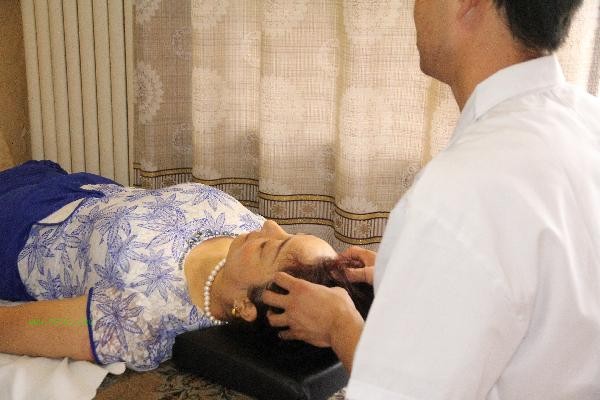
Use your thumb to press and massage acupoints such as Yingxiang and Taiyang for 1-2 minutes each, combined with the technique of opening the door. Push from the center of the brow to the hairline 30 times, and then use both thumbs to push the crown 50 times. Massaging once a day in the morning and once in the evening can promote blood circulation in the nasal cavity. Clean your hands and trim your nails before massage, with an appropriate amount of soreness. Can be used in conjunction with peppermint oil to enhance the effect of unblocking.
During the treatment of sinusitis with traditional Chinese medicine, it is necessary to avoid wind and cold, have a light diet, and avoid spicy and stimulating foods as well as rich and sweet flavors. Properly engage in soothing exercises such as Eight Section Brocade and Tai Chi to enhance lung health function. Keep the nasal cavity clean and rinse with saline solution. Maintain a regular schedule and avoid overexertion. If the symptoms persist and do not improve, or if there are symptoms such as fever or changes in vision, it is necessary to seek medical attention promptly to check for complications. Patients with chronic sinusitis are recommended to adhere to systematic conditioning for at least 3 months.





Comments (0)
Leave a Comment
No comments yet
Be the first to share your thoughts!