
Prostatitis can be treated by oral administration of traditional Chinese medicine, acupuncture and moxibustion, massage, external application of traditional Chinese medicine, and life conditioning. Prostatitis is usually caused by factors such as damp heat accumulation, qi stagnation and blood stasis, kidney deficiency, etc., manifested as symptoms such as frequent urination, urgency to urinate, and perineal swelling and pain.

1. Oral administration of traditional Chinese medicine
For damp heat type prostatitis, follow the doctor's advice to use modified Bazheng Powder, which contains ingredients such as Plantago asiatica and Quercus acutissima, which can help clear heat and dampness. Qi stagnation and blood stasis type can be treated with Shaofu Zhuyu Tang, which contains medicines such as Angelica sinensis and Paeonia lactiflora to help promote blood circulation and remove blood stasis. The kidney deficiency type commonly uses Yougui Pill or Zuogui Pill, including prepared rehmannia, yam, etc., which can tonify the kidney and consolidate the root. Traditional Chinese medicine decoctions should be adjusted according to the syndrome type to avoid self medication.
2. acupuncture and moxibustion
Acupuncture at Guanyuan, Zhongji, Sanyinjiao and other points, combined with moxibustion at Shenshu and Mingmen, can improve local blood circulation. In the acute phase, laxative acupuncture is used, while in the chronic phase, tonic acupuncture is used, with 2-3 treatments per week. Electroacupuncture stimulation of Zhibian and Huiyang acupoints has a good effect on relieving pain, and should be operated by professional physicians.
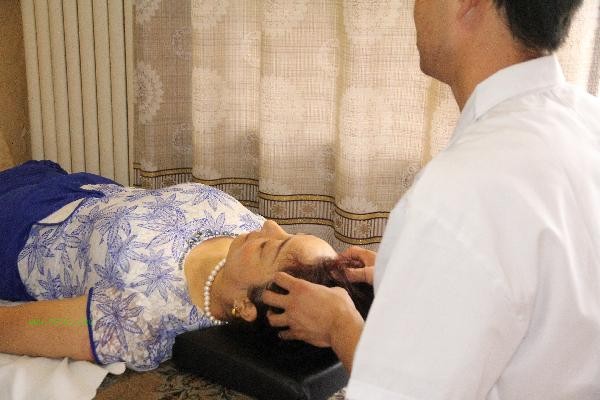
3. Massage
Push and massage along the Ren meridian from Shenque to Qugu acupoint, combined with acupressure of Yinlingquan and Taixi acupoints, for 15-20 minutes each time. Local massage of the prostate can be performed through digital rectal examination to promote the discharge of glandular secretions. The massage force should be gentle to avoid violent manipulation that exacerbates congestion. It is contraindicated when combined with acute infection.

4. External application of traditional Chinese medicine
Apply Jinhuang powder mixed with Huangjiu to the perineum, containing ingredients such as rhubarb and huangbai, which can reduce swelling and pain. Chronic patients can use warm medicines such as fennel and cinnamon to package and heat iron their lower abdomen. Choose dandelion and wild chrysanthemum decoction for sitz bath, with water temperature controlled at around 40 ℃ for 15 minutes each time.
5. Lifestyle regulation
Avoid prolonged sitting and cycling, and get up and move around every hour. Avoid spicy and stimulating food, and consume foods rich in zinc such as pumpkin seeds and tomatoes in moderation. Maintain regular sexual activity and avoid suppressing ejaculation. Practice anal sphincter exercises, 3 groups per day, 20 times per group, to enhance pelvic floor muscle function. During traditional Chinese medicine treatment, it is necessary to abstain from alcohol and pay attention to the cleanliness and dryness of the perineum. During acute attacks, patients should rest in bed, while chronic patients can engage in soothing exercises such as Tai Chi. If fever or hematuria occurs, seek medical attention in a timely manner. Integrated traditional Chinese and Western medicine treatment can improve the efficacy. Maintain a relaxed mood and avoid overexertion that worsens the condition.




Comments (0)
Leave a Comment
No comments yet
Be the first to share your thoughts!