
During menstruation, it is generally possible to use traditional Chinese medicine to check the pulse, but it is necessary to inform the doctor of the menstrual condition in advance. Traditional Chinese medicine mainly judges the circulation of qi and blood through changes in pulse conditions. During menstruation, women may experience physiological changes such as pulse slip, and doctors will adjust diagnostic conclusions based on individual differences. During menstruation, qi and blood are concentrated in the uterus, and some women may experience smooth or slight pulse, which is related to the physiological acceleration of blood flow when menstrual blood is discharged. Doctors can usually distinguish between normal menstrual pulse and pathological pulse by combining questioning with pulse. If there are symptoms such as dysmenorrhea and abnormal menstrual flow, the results of pulse examination may reflect a state of qi and blood stasis or deficiency, which can help to prescribe targeted conditioning formulas such as Siwu Tang granules, Aifu Nuan Gong Wan, etc.
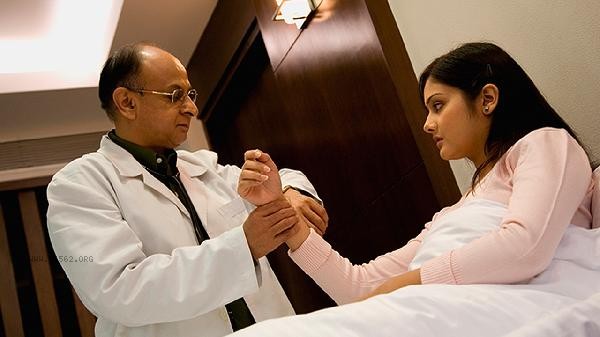
A small number of individuals with sensitive constitutions may experience significant changes in their menstrual pulse, which may affect the accuracy of diagnosing certain diseases, such as yin deficiency and excessive fire syndrome. If assessing chronic diseases unrelated to menstruation, it is recommended to avoid peak periods of menstrual flow. Before taking a pulse, one should avoid vigorous exercise or drinking cold drinks, maintain a stable mood, and avoid interfering with the authenticity of the pulse. When receiving traditional Chinese medicine diagnosis and treatment during menstruation, loose clothing can be worn to expose the wrist, and it is recommended to control the pulse time within 10 minutes. If you are taking hormone drugs or have severe anemia, you need to proactively inform your doctor. Daily use can be combined with hot compress on the lower abdomen, consumption of brown sugar ginger tea for isothermal conditioning, to avoid excessive fatigue or emotional fluctuations during menstruation.






Comments (0)
Leave a Comment
No comments yet
Be the first to share your thoughts!