
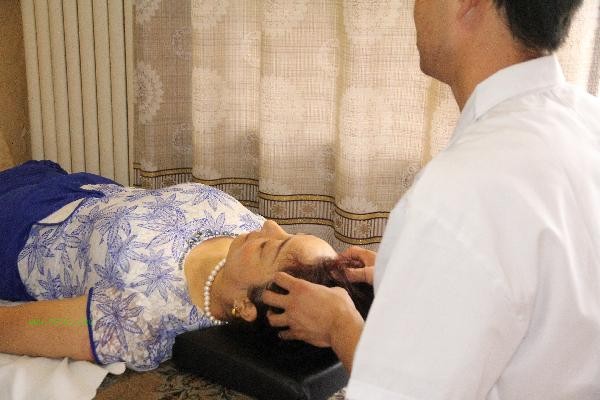
Hypertension can be controlled through traditional Chinese medicine treatment, but it is usually difficult to completely cure. Traditional Chinese medicine treats hypertension mainly by regulating qi and blood, balancing yin and yang, improving the function of zang fu organs, etc. Common methods include Chinese medicine conditioning, acupuncture and moxibustion, massage, diet regulation, etc. Hypertensive patients require long-term management, and it is recommended to combine traditional Chinese and Western medicine treatment under the guidance of a doctor. Traditional Chinese medicine believes that hypertension is related to factors such as liver yang hyperactivity, phlegm dampness resistance, and insufficient qi and blood. For hypertension with hyperactivity of liver yang, TCM commonly uses Tianma Gouteng Decoction, Zhengan Xifeng Decoction and other prescriptions, together with acupuncture and moxibustion at Taichong, Fengchi and other acupoints. Phlegm dampness resistance type can be treated with Banxia Baizhu Tianma Tang, combined with acupoints such as Fenglong and Zusanli. For those with insufficient Qi and blood, use Buyang Huanwu Tang or Guipi Tang, combined with moxibustion at acupoints such as Guanyuan and Qihai. Commonly used Chinese medicinal herbs include Gouteng, Tianma, Danshen, Huangqi, etc., which have the effects of calming the liver and suppressing yang, promoting blood circulation and removing blood stasis, and nourishing qi and spleen. Acupuncture and moxibustion can regulate autonomic nervous function and improve vascular elasticity by stimulating specific points. Massage can relieve neck muscle tension and promote blood circulation in the head. It is recommended to have a low salt and low-fat diet, and to consume medicinal and edible ingredients such as celery, hawthorn, and chrysanthemum in moderation. Patients with hypertension should pay attention to the relatively slow effectiveness of traditional Chinese medicine treatment, and it takes several months to evaluate the effect. During the treatment period, blood pressure should be regularly monitored to avoid discontinuing Western medicine at will. If symptoms such as dizziness worsen and chest tightness occur, seek medical attention promptly. In daily life, it is important to maintain emotional stability, avoid staying up late and overexertion, and engage in moderate soothing exercises such as Ba Duan Jin and Tai Chi. Quit smoking, limit alcohol consumption, control weight, and limit daily salt intake to no more than 5 grams. It is recommended to undergo liver and kidney function tests every 3-6 months to evaluate the long-term safety of medication. When combining traditional Chinese and Western medicine treatment, attention should be paid to drug interactions and the doctor should be truthfully informed of the Chinese herbal formula used.






Comments (0)
Leave a Comment
No comments yet
Be the first to share your thoughts!