
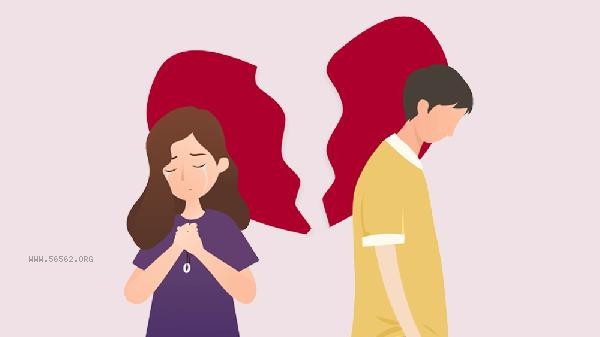
The common reasons for women to file for divorce include emotional breakdown, economic conflicts, domestic violence, personality differences, long-term separation, extramarital affairs, value conflicts, and unequal distribution of family responsibilities. These reasons may reflect practical issues in marriage or serve as a subtle way to end a relationship.

1. Emotional breakdown
Weak emotional foundation or broken emotional connections are common reasons for divorce. Both spouses may experience emotional distance due to long-term lack of effective communication, manifested as no longer sharing life details, avoiding intimate contact, or being indifferent to each other's lives. This situation is often accompanied by sustained emotional cold violence, ultimately leading to irreparable relationship breakdown.
2. Economic conflicts
Financial conflicts account for a significant proportion of the reasons for marital dissolution. Common manifestations include differences in consumer attitudes, disputes over debt sharing, and struggles for income control. When one party has long-term control over the family economy or engages in excessive consumption behavior, it is easy to cause sustained economic pressure, which will gradually erode the foundation of marital trust.
3. Domestic violence
Physical injury or mental abuse constitutes a legitimate reason for divorce. In addition to physical violence, continuous verbal insults, threats and intimidation, and restrictions on personal freedom all fall under the category of domestic violence. Victims usually need to collect medical records, alarm receipts, and other evidence, which have important legal effects in divorce proceedings.
4. Personality incompatibility
Long term lifestyle habits and personality differences may make it difficult to maintain a marriage. Specifically manifested as conflicting ways of handling things, differences in emotional management abilities, and unequal social needs. When both parties are unable to establish rules of coexistence through negotiation, daily friction can escalate into irreconcilable conflicts.

5. Long term Separation
Emotional distance caused by geographical separation is often used as a reason for divorce. A separation status of more than two years may change the interaction pattern between spouses, leading to a reduction in common language and separation of life trajectories. Legal continuous separation for a certain period of time can serve as proof of the breakdown of the marital relationship.
6. Extramarital affairs
Partner infidelity can directly undermine the foundation of marital trust. Both emotional infidelity and physical infidelity can lead to persistent suspicion and arguments. Even if the wrongdoer expresses remorse, the victim may still choose to end the relationship due to psychological trauma.
7. Conflict of Values
Differences in educational philosophy, religious beliefs, or life goals may lead to fundamental contradictions. These types of conflicts usually involve core life concepts and are difficult to resolve through compromise. For example, conflicting views on childbirth and differences in caring for the elderly often become irreconcilable causes of divorce.
8. Unequal distribution of responsibilities
Unequal distribution of household labor and parenting responsibilities can easily accumulate resentment. When one party takes on the majority of household or parenting responsibilities for a long time, while the other lacks a sense of participation, this inequality can evolve into emotional consumption. Modern women are more likely to file for divorce as a result. When the above problems arise in marriage, it is recommended to first try professional help such as marriage counseling. Both spouses can improve their relationship by establishing effective communication mechanisms and developing a shared living plan. If mediation is ineffective, the marriage relationship should be terminated through agreement or litigation in accordance with the law, and relevant evidence materials should be collected during the process. After divorce, it is necessary to pay attention to psychological adjustment and seek psychological counseling services if necessary to help get through the emotional transition period. Whether choosing to maintain or end a marriage, it is crucial to maintain rational decision-making and self-protection awareness.








Comments (0)
Leave a Comment
No comments yet
Be the first to share your thoughts!