
Backward walking is a special sport that many people may find strange, but in fact, it is beneficial to the human body. We often see people walking backwards in parks or open spaces, and those who persist in walking backwards know the benefits. Some people say that walking backwards can help lose weight, but can walking backwards help with weight loss? Is it fast to lose weight by walking backwards?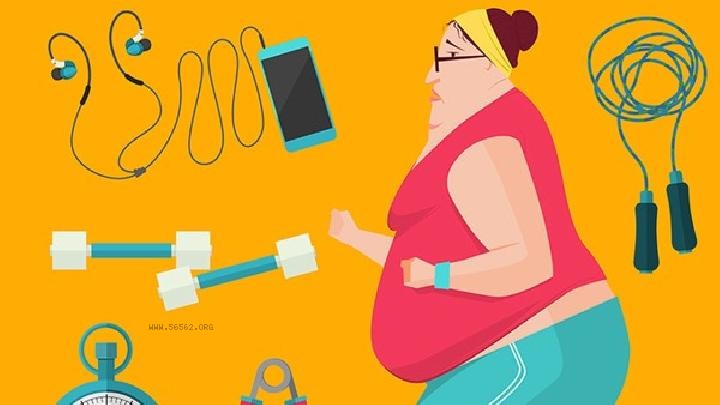 1. Can walking backwards help with weight loss?
Walking backwards is more difficult compared to walking forwards, and requires more effort to coordinate various parts of the body in order to overcome difficulties and move forward. This means that walking backwards consumes more calories than walking forwards. In addition, walking backwards in the correct posture, such as lifting the head, chest, abdomen, and buttocks, will also consume more calories. The correct reversal can bring about weight loss effects.
2. How to do reverse walking for good weight loss effect
(1) Use the correct posture to reverse walking
When reversing, lift your head, chest, abdomen, and buttocks. The hands naturally hang down on both sides of the body, bend the elbows and make half a fist on both sides of the body, and change according to the movement of the feet. The changes in the hands can be like a slow running posture, first using the right or left foot to step back, landing the toes first and the heels behind. At the same time, pay attention to using force to straighten your legs when moving back and forth, and avoid bending your knees. This increases the strength of the knee joint and thigh muscles to withstand gravity, and exercises the muscles and ligaments around the knee joint.
(2) Alternating between jogging and brisk walking
Simply walking backwards is not as fast as walking forwards and can affect calorie consumption. To achieve better weight loss results, it is recommended to do some backward walking exercises while jogging or brisk walking, which can have a better weight loss effect.
(3) Maintain around 30-40 minutes
Generally, exercise starts burning fat after 20 minutes of exercise. To lose weight through walking backwards, it is necessary to exercise regularly for a long time, and the best duration for each exercise is around 30-40 minutes, which not only produces weight loss effects but also does not last too long.
3. Benefits of walking backwards
1. Spinal correction
The OL generation sits in front of the computer day and night, accumulating day and night fatigue, and more or less already has some hunchback phenomenon, which is unavoidable. Because people's daily lives, whether walking or running, are always forward and unidirectional, and the forward shift of the center of gravity and the forward tilt of the spine inevitably cause the trunk to bend, leading to hunchback over time, and the more severe the hunchback becomes with age. The principle of reversing and correcting hunchback lies in the fact that it involves moving the center of gravity backwards, which inevitably has a corrective effect on the curvature of the spine (hunchback).
2. Treatment of lower back pain
As is well known, the OL group is a high-risk group for lower back diseases such as lumbar disc herniation and lumbar muscle strain; In summary, it is still caused by prolonged sitting, and of course, personal reasons also account for a certain part, such as less exercise, improper sitting posture, high stress, and other factors. The principle of treating lower back pain by walking backwards is also the same as the principle of correcting the spine. Suddenly changing the direction of movement and center of gravity can have a good therapeutic effect on the exercise of the lumbar spine.
3. Weight loss
This is a new fitness and weight loss concept introduced by an army medical center in Texas, USA, for fitness and weight loss enthusiasts. According to their research, when walking backwards, one must lift their head, chest, abdomen, and buttocks, which consumes more energy, even comparable to the energy consumed by jogging, especially for the consumption of stubborn fat in the waist, abdomen, and buttocks; The areas where the OL family is most prone to accumulating fat are the waist, abdomen, and buttocks.




Comments (0)
Leave a Comment
No comments yet
Be the first to share your thoughts!