
The spiciness of white radish can be removed through methods such as blanching, salting, sugar soaking, or long-term stewing. The spiciness of white radish mainly comes from glucosinolates, which can decompose or be lost under high temperature or osmotic pressure.
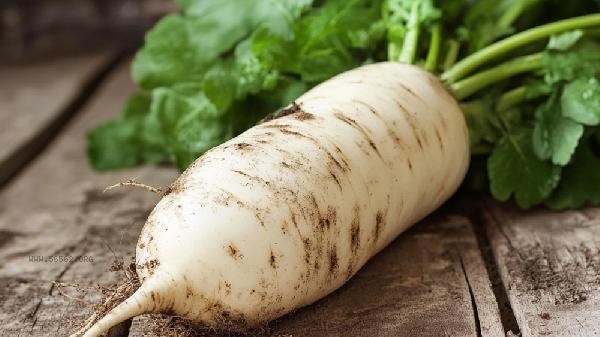
Cut the white radish into pieces and blanch it in boiling water. Sulfides will evaporate with the steam, and the spiciness will be significantly reduced. The blanching time should be controlled at 1-2 minutes, which can preserve the crispy and tender taste while reducing the spiciness. Blanched white radish is suitable for cold mixing or quick stir frying, but some water-soluble vitamins may be lost.
Marinate with salt for half an hour and squeeze out the water. Cell rupture promotes the leakage of spicy substances. The white radish after salt pickling is more flexible and suitable for making pickles or Pickled vegetables. This method will lose some minerals, so rinse with clean water after pickling to avoid excessive saltiness. The sugar soaking method uses osmotic pressure to extract spicy ingredients, making it suitable for making candied fruits or dessert toppings. When stewed for more than 20 minutes, sulfides will decompose into volatile substances, and the starch in radish will be converted into sugars. Long term heating is suitable for making Kanto style soup or pork rib soup, but it can damage vitamin C and some active enzymes. Freezing and thawing can also reduce the spiciness, as ice crystals damage the cell structure and cause the loss of spicy ingredients. The spiciness intensity of different parts of white radish varies, with the parts near the epidermis and roots being more spicy. Choosing winter harvested white radish has a lighter spicy taste, while spring radish has a stronger spicy taste due to its short growth cycle. While removing the spiciness, it can be paired with fresh ingredients such as seaweed and mushrooms, or a small amount of rice vinegar can be added to balance the flavor. It is recommended to keep some spicy ingredients for daily consumption, as they contain glucosinolates that have antioxidant and digestive promoting effects.








Comments (0)
Leave a Comment
No comments yet
Be the first to share your thoughts!