
Cooking porridge and sticking to the pot is usually caused by insufficient moisture or improper control of the heat, and may also be related to factors such as pot material, rice water ratio, and stirring frequency. When cooking porridge, if the water evaporates too quickly or the rice grains settle for too long, a large amount of starch will precipitate and adhere to the bottom of the pot. When using metal pots with uneven thermal conductivity, local high temperatures can easily cause rice slurry to coking. When the ratio of rice to water is less than 1:8, the rice grains lack free water lubrication after absorbing water and expanding, resulting in a sudden increase in viscosity. Failure to stir in a timely manner can result in uneven heating, causing the bottom rice grains to gelatinize and stick together into lumps. Due to starch aging, some aged rice is more prone to release sticky substances when cooked. Some special cookware, such as flat bottomed pans with damaged non stick coatings, can exacerbate food adhesion at high temperatures. If the cooking mode of Congee is not selected when using the electric rice cooker, the program temperature control may not be able to meet the long-term needs of slow cooking of porridge. In areas with relatively hard water quality, the combination of minerals and starch can also increase the probability of sticking to the pot. Glutinous rice or high starch rice varieties have significantly stronger viscosity after gelatinization due to their high content of amylopectin.

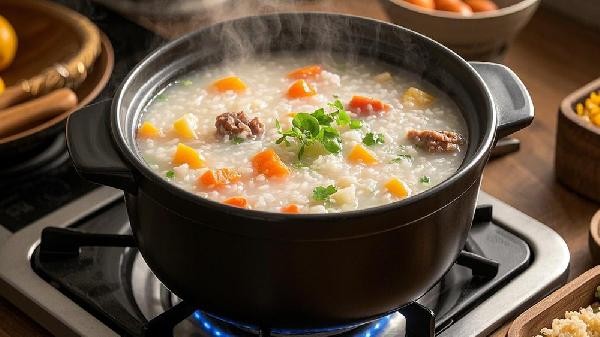
It is recommended to choose a thick bottomed stainless steel pot or sand pot, with a rice water ratio of around 1:10. After boiling, turn to low heat and simmer slowly while stirring intermittently. New rice is less likely to stick to the pot than aged rice, and can be briefly washed to remove surface impurities before cooking. If an electric rice cooker is used, the model with the function of cooking porridge is preferred. After completion, the power is cut off in time to avoid the residual temperature causing the bottom to burn. After sticking the pot, soak it in warm water to soften the burnt part and avoid scratching and damaging the cookware with a metal spatula.








Comments (0)
Leave a Comment
No comments yet
Be the first to share your thoughts!