
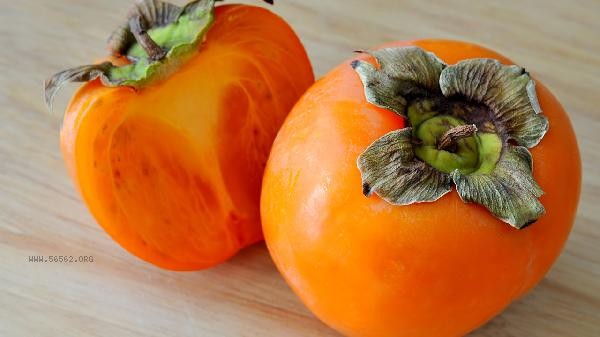
The astringency of frozen persimmons can be improved by soaking them in warm water, sealing them with ripe apples, peeling them for consumption, adjusting the thawing time, or making persimmon sauce. The astringency of persimmons is mainly related to high tannin content, incomplete astringency, or the impact of freezing process on taste.
1. Soak in Warm Water
Soak frozen persimmons in water at around 40 degrees Celsius for about 12 hours, keeping the water temperature constant. Tannic acid is easily soluble in warm water, which can effectively reduce astringency and is suitable for persimmons with higher hardness. Be careful to avoid softening the fruit pulp due to high water temperature, and consume it promptly after soaking.
2. Apple ripening
Place frozen persimmons and ripe apples in a sealed bag and store at room temperature for 2-3 days. The ethylene gas released by apples can accelerate the ripening of persimmons and promote the conversion of tannic acid. This method is suitable for persimmons with slight astringency, and the softening degree should be checked daily to prevent excessive ripening.
3. Peeling treatment
Remove the outer skin and subcutaneous fibrous layer of frozen persimmons, and tannic acid is more distributed in the skin. Peel and slice or cut into pieces for consumption, can be paired with yogurt to neutralize astringency. This method is suitable for ready to eat scenarios, but it may result in the loss of some dietary fiber. It is recommended to retain some of the fruit pulp connections to reduce waste.
4. Controlled Thawing
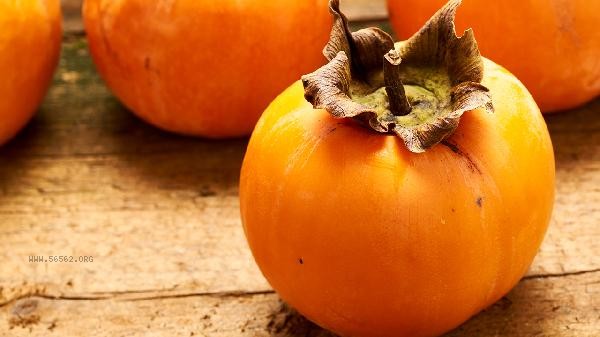
Freezing persimmons in refrigeration for 8 hours results in less astringency compared to rapid thawing at room temperature. Slow thawing can evenly decompose tannic acid, avoiding the sudden rupture of cells and the release of large amounts of astringent substances. If there is still a sense of astringency after thawing, it can be cut into pieces and left to air dry for 1 hour to further oxidize and degrade the residual tannins.
5. Processing and Manufacturing
Crush frozen persimmons, add lemon juice, and simmer over low heat to make a sauce. High temperature and acidic environment can decompose tannic acid. Can be paired with bread or used as a dessert ingredient, and the astringency almost disappears after processing. This method is suitable for processing a large amount of astringent persimmons, but there may be a certain loss of vitamin C.
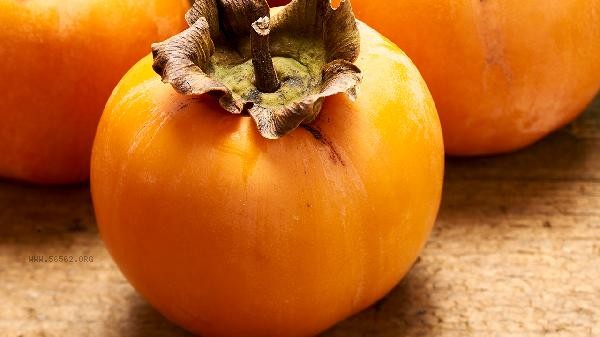
It is recommended to choose fully mature varieties of frozen persimmons for daily consumption, such as ground persimmons and mirror persimmons, which have a lighter astringency. People with gastrointestinal sensitivity should control their consumption and avoid eating on an empty stomach. If long-term consumption of astringent persimmons causes tongue numbness or bloating, it may be due to tannic acid stimulating the mucosa, which can be relieved by drinking diluted salt water. When storing, it is necessary to seal to prevent cross flavors. It is recommended to consume the thawed persimmons within 24 hours to maintain their taste.








Comments (0)
Leave a Comment
No comments yet
Be the first to share your thoughts!