
The main methods for quickly making steamed buns into dough include activating yeast with warm water, adding sugar to promote fermentation, controlling the ambient temperature, using baking powder as an aid, and fully exhausting the dough during kneading.

1. Warm water activated yeast
The yeast has the best activity in warm water at 35-38 ℃. It can dissolve the yeast and a small amount of white sugar in warm water for 5 minutes, and foam appears, indicating successful activation. High water temperature can kill yeast, while low water temperature can slow down fermentation rate. In winter, water slightly above body temperature can be used for mixing, and in summer, normal water can be directly used.
2. Adding sugar to promote fermentation
Adding 5-10% white sugar or honey to the dough can provide the energy needed for yeast to rapidly reproduce. The carbon dioxide produced by sugar decomposition causes dough to swell, but excessive sugar may inhibit yeast activity. Milk can also accelerate fermentation by replacing water and flour, with lactose components contributing to yeast metabolism.
3. Control the ambient temperature
Placing the dough in an environment of around 40 degrees Celsius can shorten the fermentation time, such as the oven fermentation function, steam pot residual temperature, or insulation box. Cover with a damp cloth to prevent the surface from drying out, and the heating step can be omitted during room temperature fermentation in summer. For every 10 degrees Celsius increase in temperature, yeast activity approximately doubles, but it becomes ineffective beyond 50 degrees Celsius.
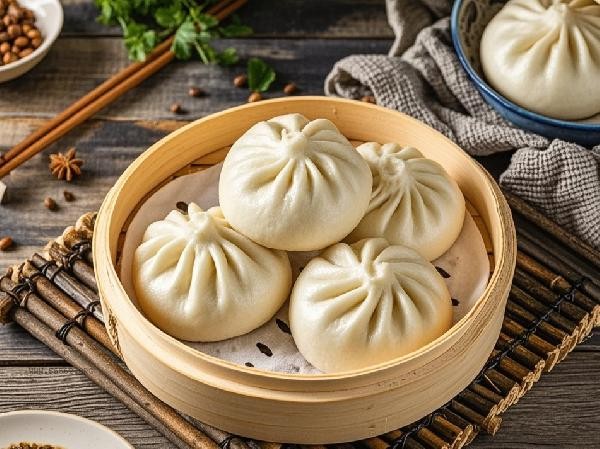
4. Use baking powder as an auxiliary
to add 1-2% aluminum free baking powder on the basis of yeast fermentation, which produces a dual gas production effect when in contact with water. Pao Da Fen is suitable for situations where rapid prototyping is urgently needed, but using it alone will make the buns lack the unique aroma of yeast fermentation. Attention should be paid to mixing the baking powder evenly with the flour to avoid direct contact with the liquid.
5. Exhale the dough thoroughly
After the first fermentation, repeatedly knead and press the dough to release large bubbles, ensuring even distribution of yeast. After dividing the dough, it is necessary to let it rise again for 15 minutes to allow the gluten to relax and facilitate shaping. The secondary fermentation time should be controlled within 30 minutes, and the volume should be observed to increase by 1.5 times before steaming. Excessive fermentation can cause sourness and collapse.

When making instant noodles, attention should be paid to the expiration date of the yeast. After opening, it should be sealed and refrigerated for storage. The fermentation state of the dough is determined by slow rebound when pressed with fingers, and can be paired with aged noodles or yogurt to enhance flavor. When steaming, cold water should be added to the pot, and the temperature should be slowly increased over medium heat to avoid sudden heating causing dead surfaces. Maintain humidity during the dough making process and adjust it by placing it in a hot water bowl. Different types of flour have significant differences in water absorption, and it is recommended to reserve 10% of water for adjustment. Whole wheat flour needs to extend the fermentation time.








Comments (0)
Leave a Comment
No comments yet
Be the first to share your thoughts!