
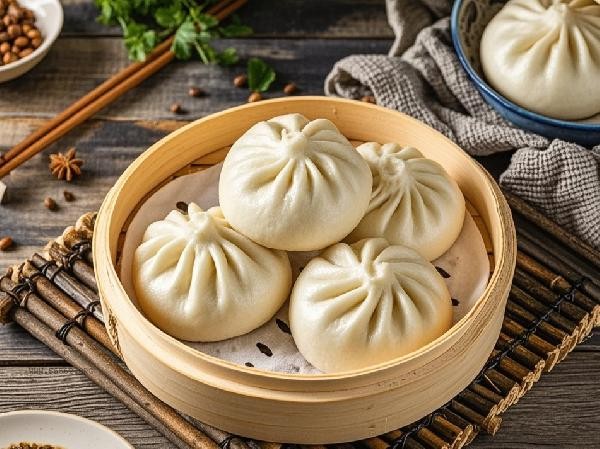
The softness and hardness of the dough used for making buns need to be adjusted according to the type of filling and taste requirements. Plain filling is suitable for soft dough, while meat filling is suitable for hard dough. When the dough is softer, it has better extensibility and is less likely to break when wrapped in filling. It is suitable for wrapping vegetarian fillings with high moisture content, such as chives, eggs, or zucchini shrimp. After fermentation, the pores of the soft dough are uniform, and after steaming, the fluffiness is higher. The entrance is soft but the support is weak. During production, it is advisable to increase the amount of water by 5% -10% and shorten the kneading time to less than 10 minutes to avoid excessive kneading that can lead to strong gluten.
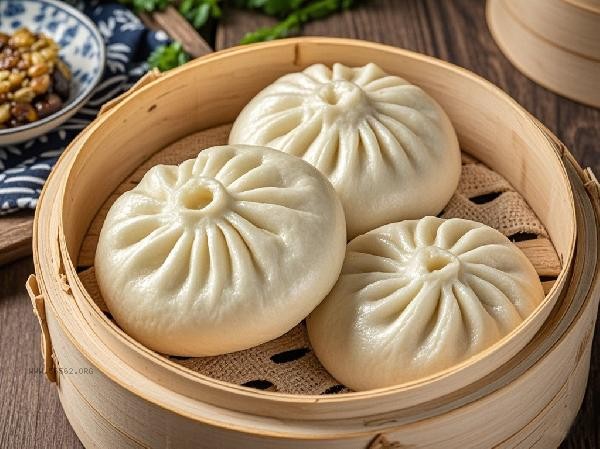
A slightly harder crust can better support oily meat filling, avoiding crust collapse or oil leakage during steaming. Hard dough needs to be kneaded for more than 15 minutes to form a tight gluten network, and the fermentation time is extended by 20% to balance the hardness. Suitable for making categories such as fresh meat buns and sauce meat buns that require maintaining a three-dimensional shape, with strong bite force and minimal layer adhesion in the finished product. Both soft and hard dough should ensure sufficient basic fermentation, and it is advisable to ferment to twice the size when the ambient temperature is around 25 ℃. Before steaming, the soft dough can be awakened for 10 minutes, while the hard dough needs 15 minutes. After the water in the steamer boils, put in the steamed buns. Heat the vegetarian filling over high heat for 8 minutes and the meat filling over medium heat for 12 minutes. Turn off the heat and simmer for 3 minutes to avoid shrinking. In daily life, you can try the semi hot noodle method to balance softness and hardness, which involves adding flour in batches of 70 ℃ hot and cold water to balance flexibility and elasticity.








Comments (0)
Leave a Comment
No comments yet
Be the first to share your thoughts!