
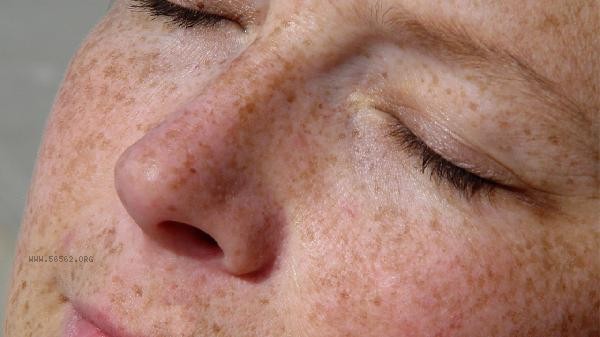
Coffee spots can be treated through laser therapy, cryotherapy, chemical exfoliation, surgical treatment, photodynamic therapy, and other methods. Coffee spots may be related to genetic factors, UV radiation, endocrine disorders, and other factors, usually appearing as well-defined brown patches.

1. Laser therapy
Laser therapy is a commonly used method for eliminating coffee spots, which destroys melanin particles through selective photothermal action. Equipment such as Q-switched ruby laser and Q-switched emerald laser have better effects on skin type coffee spots. After treatment, there may be temporary redness, swelling, or pigmentation. It is necessary to avoid sun exposure and use repair products according to medical advice. The treatment interval is generally 1-3 months, and most of them need to be repeated 3-5 times.
2. Cryotherapy
Cryotherapy uses liquid nitrogen low temperature to cause the necrosis and shedding of pigment cells, which is suitable for small coffee spots. During treatment, there may be a stinging sensation, and after surgery, blisters and scabs may appear. It is necessary to keep the wound dry to prevent infection. This method is effective for some superficial coffee spots, but may leave slight scars or hypopigmentation, and is not suitable for exposed areas such as the face.
3. Chemical exfoliation
Chemical exfoliation uses keratolytic agents such as fruit acid and salicylic acid to promote epidermal shedding, which has a certain improvement effect on shallow pigment deposition. Acidic acid with a concentration of 20% -35% needs to be operated by professionals. After treatment, there may be flaking and tightness, and it is necessary to strengthen moisturizing and sun protection. This method cannot eradicate pigments in the dermis layer and needs to be combined with other treatment methods.
4. Surgical treatment
Surgical resection is suitable for localized and prominent coffee spots, especially for lesions suspected of malignant transformation. Direct excision, suturing, or flap transfer can completely remove the lesion, but linear scars may remain. Preoperative assessment of plaque depth and extent is necessary, and postoperative prevention of scar hyperplasia is necessary. This method is not a routine treatment option and is only used for special cases.
5. Photodynamic therapy
Photodynamic therapy selectively destroys pigment cells through photosensitizers and specific wavelength light, and has auxiliary therapeutic effects on stubborn coffee spots. Before treatment, it is necessary to apply photosensitizers such as aminolevulinic acid externally. After irradiation, there may be a burning sensation and temporary pigmentation. This method is often used in combination with other treatments and requires strict avoidance of light for 48 hours to prevent phototoxic reactions. After coffee spot treatment, strict sun protection is required, using a broad-spectrum sunscreen with SPF30 or above and physical shielding. Avoid scratching the treated area, and during the scab formation period, apply medical dressings to promote repair. Daily attention should be paid to supplementing vitamin C and vitamin E, and reducing the intake of spicy and stimulating foods. If sudden enlargement, darkening of color, or rupture of plaques are found, timely medical examination should be conducted to screen for related diseases such as neurofibromatosis. All treatments must be carried out by professional doctors in formal medical institutions, and corrosive drugs or folk remedies cannot be used on one's own.







Comments (0)
Leave a Comment
No comments yet
Be the first to share your thoughts!