
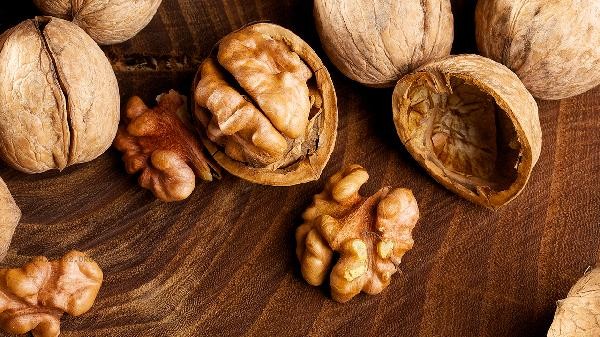
The inner film of walnuts can be removed by soaking in hot water, natural drying, oven baking, manual peeling, freezing treatment, and other methods. The brown thin skin on the surface of walnut kernels contains tannic acid, which has a bitter taste but certain nutritional value. Choose whether to keep it according to your consumption needs.
1. Hot water soaking
Soak the shelled walnut kernels in hot water at around 80 ℃ for 5 minutes. After the film expands due to heat, it separates from the kernels and can be easily peeled off by gently rubbing with your fingers. This method can maximize the preservation of walnut kernel integrity and is suitable for cooking needs that require maintaining the shape of the kernel. Be aware that high water temperature may lead to nutrient loss.
2. Natural drying
Fresh walnuts should be shelled and laid flat in a well ventilated area to dry for 2-3 days. After the film is dehydrated and crispy, it should be rubbed and removed. Traditional methods can preserve the original fragrance of walnuts, but attention should be paid to moisture and mold prevention, as humid environments may prolong processing time. The film after drying is curled and easier to peel off.
3. Oven baking
Lay walnut kernels on a flat baking tray and bake at 150 ℃ for 8-10 minutes. The high temperature causes the film to shrink and crack. After taking it out, wipe it with a kitchen towel while it is hot to remove it. Baking can stimulate the walnut aroma, but the time needs to be controlled. Excessive heating can cause oil oxidation and produce a crackling taste.
4. Manual peeling
Use a toothpick to gently pick open the edge of the film along the groove of the walnut kernel, and slowly tear off the complete film. Suitable for occasions that require high integrity of nuts, such as making pastry decorations. This method is time-consuming but can retain maximum nutrition. When processing, pay attention to keeping the hands dry and slip resistant.
5. Freezing treatment
Seal the walnut kernels and freeze them for 2 hours. Low temperature makes the film brittle and fragile. After removal, gently rub the container to separate. Freezing can maintain the original flavor of walnuts and is easy to operate. It should be noted that prolonged freezing time can cause the loss of moisture in the nuts, affecting their taste.
Walnut film contains antioxidant components and dietary fiber, and complete removal may reduce its nutritional value. For daily consumption, a portion of the film can be retained and processed using the above method until the film becomes thinner. After removing the film, it is recommended to seal and store the walnuts in a dark place, avoiding high temperature and high humidity environments. Paired with ingredients such as black sesame and red dates, it can neutralize the sourness of tannins. When making walnut sauce, retaining the film can enhance the color and flavor of the finished product. Special populations such as oral ulcer patients are recommended to consume it completely after removing the membrane to reduce the irritation of tannic acid on the mucosa.








Comments (0)
Leave a Comment
No comments yet
Be the first to share your thoughts!