
The key to peeling jackfruit is to use a knife to help and master the techniques of pulp separation. The main steps include preparing tools, cutting the outer skin, separating the fruit kernels, removing the flesh, and cleaning the mucus.
I. Preparation tool
Choose a sharp knife and thick gloves. There is mucus on the surface of jackfruit and the skin is hard, so it needs to be protected. Place old newspapers or plastic sheeting under the cutting board to facilitate the cleaning of any remaining mucus. It is recommended to use stainless steel material for the cutting tool to avoid juice corrosion of the blade.
II. Cut the skin
Place jackfruit vertically and cut it into two halves from the middle. The depth of the incision should be just touching the internal nucleus to avoid cutting through the white fascia around the nucleus. After cutting in half, it can be further divided horizontally into a quarter piece, at which point the yellow flesh is clearly visible.
3. Separate the Fruit Core
Each petal of fruit flesh is wrapped in an elliptical core in the center, which is cut along the edge of the core with the tip of a knife. There is abundant mucus at the junction of the fruit core and flesh, which can be coated with edible oil on the hand to prevent sticking. The separated fruit kernels can be washed, cooked, and consumed, rich in starch and minerals.
4. Take out the fruit pulp
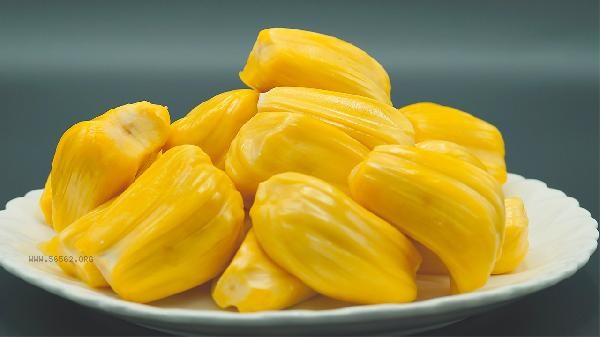
Wear gloves and tear off the pulp from the white fascia. The fascia has strong toughness and needs to be patiently peeled off. The intact flesh is goose yellow sac shaped, with golden fruit shreds wrapped inside. Fruit shreds are also edible and rich in dietary fiber, but have a rougher taste.
Fifth, clean the mucus.
The residue of mucus on knives and cutting boards can be wiped with cooking oil first, and then cleaned with detergent. The mucus on the hands can be washed with salt and rinsed off, or decomposed by applying lemon juice. It is recommended to refrigerate the processed fruit pulp to avoid oxidation and blackening of the mucus, which can affect the taste.
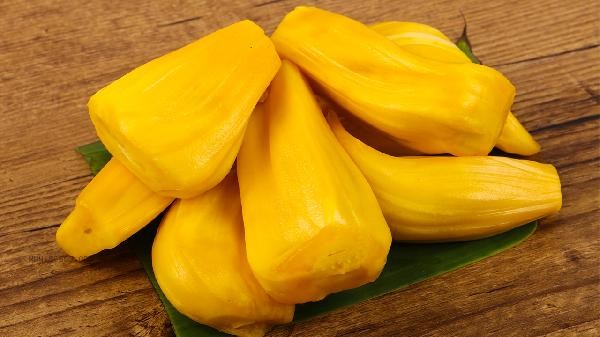
Fresh jackfruit pulp is rich in vitamin C and potassium, and the daily consumption is recommended to be controlled within 200g. Immature fruits contain a high amount of tannic acid, which may irritate the oral mucosa. If allergic reactions such as skin itching occur during treatment, the contact area can be rinsed with baking soda water. The extracted fruit kernels can be paired with pork rib stew or cooked in salt water as snacks. The fully peeled fruit flesh is suitable for making cold foods such as fruit salads and yogurt cups, avoiding high temperature heating that can damage the protease activity it contains.








Comments (0)
Leave a Comment
No comments yet
Be the first to share your thoughts!