
The correct method for cutting pomegranates requires first removing the top stem, cutting the outer skin along the pattern of the fruit petals, and then peeling them off. When separating the fruit pieces, the petals can be immersed in water for operation.
1. Remove the stem and scratch the lines.
Select a mature pomegranate and use a knife to cut off the protruding stem at the top, exposing the white diaphragm inside. Observe the naturally raised valve patterns on the surface of the fruit, and use the tip of a knife to cut the skin longitudinally along the patterns, with a depth that is suitable for just touching the flesh, to avoid chopping the internal fruit grains. This step can maintain the integrity of the fruit petals and facilitate subsequent peeling.
2. Peel and Split
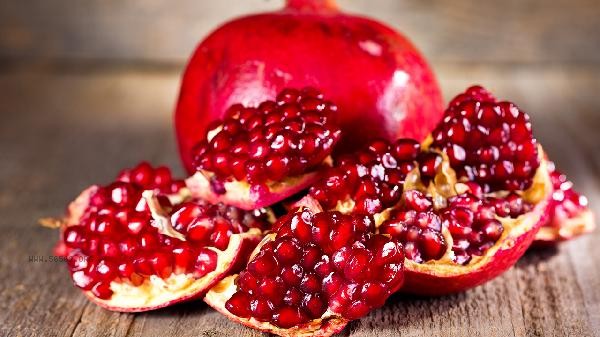
Hold the pomegranate with the carved lines in both hands, press the thumb against the top incision and slowly open it to both sides, causing the skin to naturally split into multiple petals along the knife mark. If adhesion occurs, gently pull the white diaphragm to assist in separation. Peel the pomegranate until it unfolds into a flower like shape, revealing tightly arranged clusters of fruit grains. At this point, the skin and flesh have been completely separated.
3. Water immersion threshing
Pour the sliced pomegranate into a basin filled with clean water, ensuring that the water surface completely submerges the fruit pulp. Using fingers to move fruit grains along the texture of the diaphragm in water, mature fruit grains will naturally fall off and sink to the bottom, while the diaphragm and residual white skin will float on the surface of the water. This method can avoid juice splashing and separate fruit grains more efficiently.
4. Drain and store
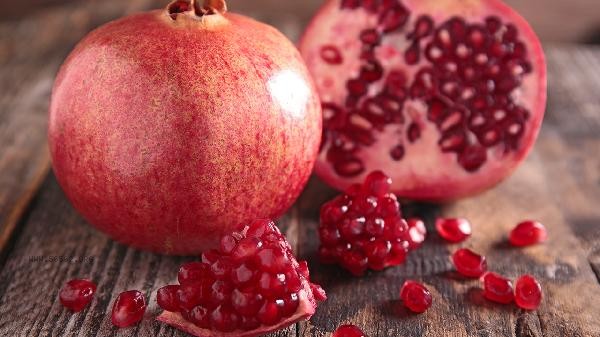
Use a strainer to scoop out the fruits from the water and drain them, then spread them on kitchen paper to absorb surface moisture. Fruits that are not immediately consumed can be stored in sealed boxes and refrigerated, or frozen flat to make pomegranate ice cubes. The processed fruits are suitable for direct consumption, salad dressing, or juice extraction, avoiding high temperature heating to prevent nutrient loss.
Fifth, Tool Selection
Using a sharp fruit knife makes it easier to accurately cut open the skin, while a blunt knife may cause the flesh to be squeezed and broken. It is recommended to equip a specialized pomegranate peeler to assist in water dehulling, with a comb like design that can quickly separate fruit grains. It is recommended to wear an apron or handle under running water during operation to prevent juice from staining clothes. Pomegranate seeds are rich in antioxidant components such as vitamin C, anthocyanins, and tannic acid. It is recommended to limit the daily intake to less than 100 grams. If mold spots on the fruit skin or brown spots are found during processing, discard it. After consumption, rinse your mouth with lemon juice to reduce pigment deposition. Pomegranates should be stored in fruits with full skin and no wrinkles. They can be stored for a long time in a well ventilated place at room temperature. After cutting, they should be consumed as soon as possible.








Comments (0)
Leave a Comment
No comments yet
Be the first to share your thoughts!