
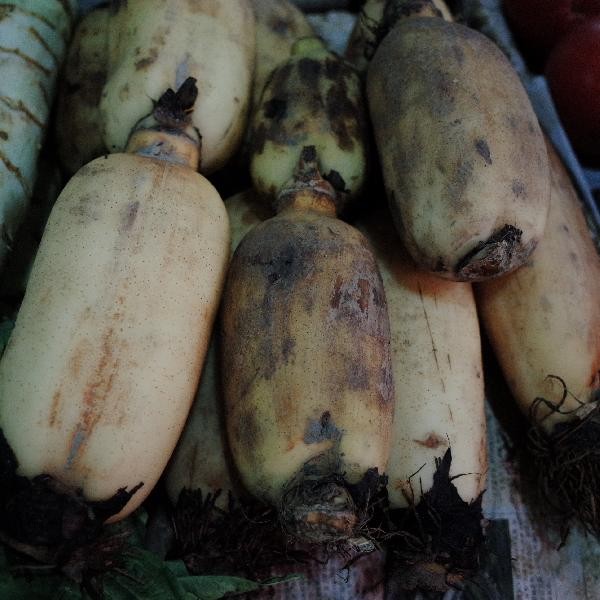
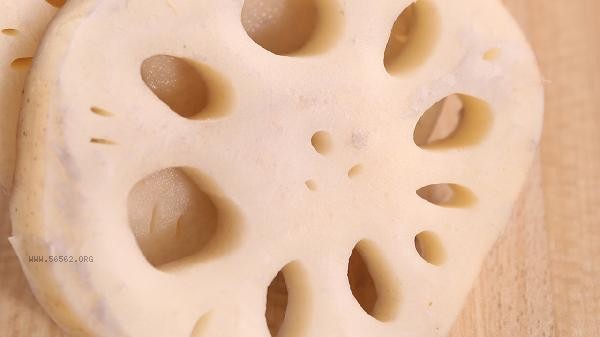
The black film in the lotus root holes can be removed by rinsing with running water and lightly brushing with a soft bristled brush. Black film is a protective film formed during the growth process of lotus root, mainly composed of polyphenolic substances. Although it does not affect consumption, it may leave soil residue or affect taste. The main cleaning methods include rinsing with running water, cleaning with a soft bristled brush, soaking in light salt water, scrubbing with white vinegar, and starch adsorption.
1. Rinse with running water
Cut the lotus root longitudinally to expose the pores, and continuously rinse the pores with running water. The water pressure can wash away most of the loose black film, making it suitable for processing fresh lotus roots. Pay attention to adjusting the lotus root angle during rinsing to ensure that each hole is covered by water flow. This method is simple and fast, but its effect on stubborn attachments is limited.
2. Soft bristle brush cleaning
Use a soft bristle brush of the same thickness as a toothbrush to gently brush into the hole. The movements should be gentle to avoid damaging the lotus root, and the effect is better when brushing with running water. This method can effectively remove the tightly attached black film, especially suitable for lotus roots with thicker pores. After brushing, rinse again to ensure there is no residue.
3. Soak lotus roots in diluted salt water
Soak lotus roots in salt water with a concentration of 3% for 15 minutes. Salt can soften the black film and sterilize it, making it easier for the black film to peel off after soaking. This method is suitable for treating lotus roots that have been cut open and oxidized black. After soaking, they need to be rinsed with running water. Note that the soaking time should not be too long, otherwise it may affect the brittleness of the lotus root.
4. Rub with white vinegar
Dilute the white vinegar and drop it into the lotus root hole to let it stand for 5 minutes. Acidic substances can decompose some pigment precipitates. Afterwards, wrap your fingers in gauze and insert it into the hole to rotate and scrub, which can remove stubborn pigment deposits. This method is particularly effective for lotus roots that have turned black due to oxidation. After treatment, they need to be thoroughly washed to avoid residual sour taste.
5. Starch adsorption
Mix starch and water into a paste and inject it into the lotus root hole. After standing still, the starch will adsorb black film impurities. The physical adsorption of starch can remove fine particles from the pores, making it suitable for processing dried and stored old lotus roots. During operation, it is necessary to repeatedly wash to ensure complete removal of starch and avoid gelatinization during cooking.

It is recommended to cook the processed lotus roots as soon as possible to avoid secondary oxidation. If not in use temporarily, it can be soaked in clean water or diluted salt water and stored refrigerated. Lotus root is rich in dietary fiber and vitamin C, suitable for cold mixing, stir frying, or stewing soup. People with spleen and stomach deficiency and cold should control their consumption, and when cooking, ginger slices can be used to neutralize the coldness. When choosing lotus roots, it is best to choose those with smooth skin and clean pores. Having intact lotus nodes at both ends can better prevent sludge from seeping in.








Comments (0)
Leave a Comment
No comments yet
Be the first to share your thoughts!