
The selected jackfruit can be judged comprehensively from the aspects of peel color, smell, touch, thorn shape, and handle state. High quality jackfruit usually has a golden and even peel, strong fruit aroma, moderate elasticity and touch, dense and full fruit thorns, and fresh and moist fruit stalks.
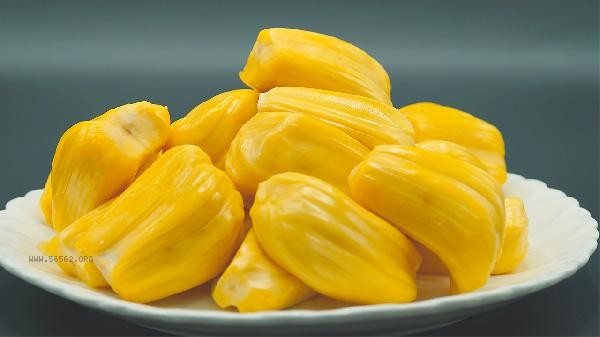
1. Skin color
The skin of jackfruit with high maturity presents uniform golden yellow or yellowish green, avoiding the selection of locally blued or blackened fruits. Jackfruit with natural skin color transition is usually sweet. If there are large areas of dark or black spots, it may be too ripe or rotten. Under sufficient sunlight, the fruit skin will form reddish brown spots, which is a normal phenomenon.
2. Odor concentration
Fresh jackfruit can smell obvious sweet smell 20 cm away from the fruit, and poor quality fruit may emit sour or alcohol fermentation flavor. If there is no aroma on the skin but there is a wine smell at the cut of the fruit stem, it indicates that the flesh has started to spoil. Some immature jackfruit needs to be kept for 1-2 days until the aroma is fully released.
3. Texture elasticity
When lightly pressing the skin with fingers, it should have moderate elasticity. If it is too hard, it indicates immaturity, and if it is too soft, it may be too ripe. The spikes of high-quality jackfruit will rebound slightly when pressed, and the spacing between adjacent spikes is even. Pay attention to checking whether there is softening exudate at the bottom of the fruit, as this type of fruit is prone to internal decay.
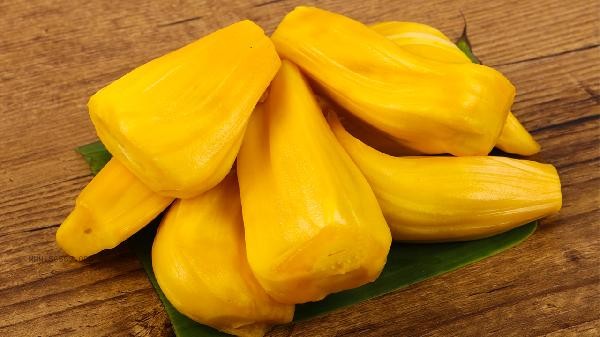
4. Spine morphology
The conical spines of healthy jackfruit are closely arranged and round at the top. The more the distance between the spines, the fuller the flesh. Underdeveloped fruits have flattened and sparse spines, and some may experience lodging or breakage. Avoid choosing fruits with blackened spines or moldy spots.
5. Fruit stalk condition
Fresh fruit stalks should have a milky white and moist cross-section, with low degree of lignification. Dry and blackened fruit stems indicate that the picking time has been too long, and those with severe browning may have been stored for more than a week. Resin leakage from the handle is a normal phenomenon, but a large amount of mucus may indicate internal deterioration.
jackfruit that is not eaten immediately after purchase can be stored in a cool place at room temperature, and the cut pulp needs to be refrigerated and eaten as soon as possible. It is recommended to soak the fruit pulp in salt water before consumption to reduce the risk of allergies, and individuals with gastrointestinal allergies should control their single intake. Jackfruit kernels can be cooked and eaten, rich in starch and vegetable protein, but those with weak digestive function should try carefully. When selecting the fruit, pay attention to avoiding obvious mechanical damage or moth eaten marks on the skin. This kind of jackfruit is more likely to breed bacteria.








Comments (0)
Leave a Comment
No comments yet
Be the first to share your thoughts!