
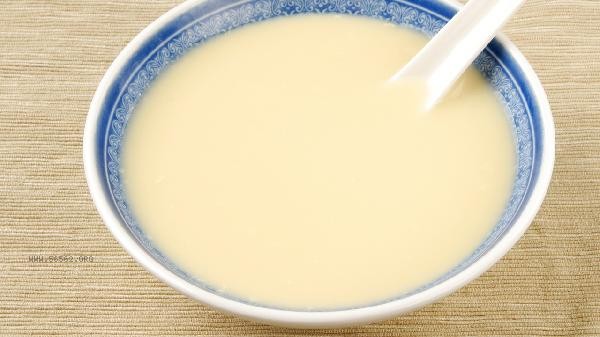
The key to beating soybean milk without spilling is to control the heat, adjust the water volume and use anti spilling tools. There are mainly methods such as controlling firepower, reserving expansion space, using spill proof pots, soaking beans in advance, and adding defoamers.
1. Control the fire power
After the soybean milk is boiled, it needs to be adjusted to the medium and small fire immediately to maintain the slightly boiling state. The fire will lead to the rapid expansion and overflow of foam, and the continuous high temperature will also destroy the nutrition of soybean milk. It is recommended to use an induction cooker or a temperature adjustable electric ceramic stove, which is easier to accurately control temperature than an open flame. After boiling, the heat can be adjusted to about 30% of the power, which can maintain the temperature and avoid overflowing.
2. Reserve expansion space
The total amount of food materials shall not exceed 60% of the container, leaving room for foam to rise. The optimal ratio of soybeans to water is 1:8 to 1:10500 grams of dry beans corresponding to 4-5 liters of water. If the soybean milk machine is used, be careful not to exceed the highest water level marked on the tank. During cooking, the machine can be suspended for 1-2 times to help release gas and reduce foam accumulation.
3. Use anti overflow pan
to select a stainless steel pan or a special anti overflow soybean milk pan with a high edge, whose special structure can block the rising path of foam. A chopstick can be inserted between the lid and body of a regular pot to create a gap and allow the steam to slowly release. Commercial soybean milk machines are usually equipped with anti overflow electrodes, which will automatically stop heating when the foam contacts the electrodes. For household models, you can purchase anti overflow function models.

4. Soak the beans in advance [SEP]. Soak the dried beans in cold storage for 8-12 hours to make the beans fully absorb water, which can reduce the coarse fiber foam generated during beating. In summer, it is necessary to change the water 2-3 times to prevent spoilage, and it is best to expand the volume of the beans to twice after soaking. When using the wall breaker, the soaked beans can shorten the grinding time and reduce the amount of foam generated due to long-term high-speed mixing.
5. Adding defoamer
The traditional method can drop 2-3 drops of edible oil or a small amount of salt to inhibit foam by changing the surface tension. The professional practice is to add food grade defoamers such as polydimethylsiloxane, with a dosage not exceeding 0.1 grams per liter. Note that commercial defoamers should meet the GB2760 standard, and sugar defoamers should be avoided for patients with diabetes.
When making soybean milk, it is recommended to choose the new beans of the same year. Old beans are prone to produce more foam. Before beating, remove moldy beans and use warm water at around 80 ℃ to reduce the bean odor. Immediately transfer to a thermos after completion to avoid layering caused by prolonged storage. People with weak gastrointestinal function can filter soybean residue, which is more conducive to nutrient absorption when consumed with whole grains. Regularly clean the sealing ring of the soybean milk machine to prevent the fermentation of residual soybean dregs from affecting the taste. If the overflow phenomenon occurs repeatedly, it is necessary to check whether the heating element is aging and causing temperature control failure.









Comments (0)
Leave a Comment
No comments yet
Be the first to share your thoughts!