
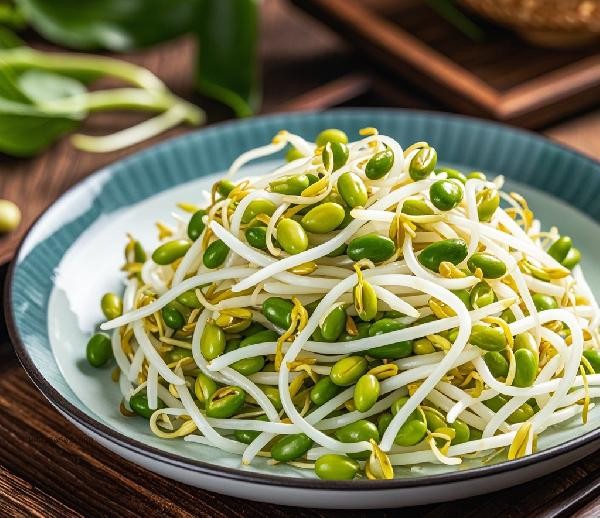
Green bean sprouts can generally be eaten if they have not spoiled after being stored for a long time, but it is not recommended to consume them if they have spoiled. Green bean sprouts are rich in water and nutrients, and prolonged storage can easily breed bacteria or cause spoilage. Green bean sprouts can be stored for a relatively long time in low-temperature environments, usually for two to three days when refrigerated. Observing whether the sprouts are full and straight, whether the color is fresh green, whether there is any odor when smelled, and whether they are sticky when touched are important criteria for judging whether the mung bean sprouts have gone bad. Unspoiled mung bean sprouts can still be safely consumed after thorough cleaning and high-temperature cooking. Although some nutrients such as vitamin C and dietary fiber have been lost, they still have edible value. If the mung bean sprouts turn yellow, wilt, water, mold, or emit a sour and rotten smell, it indicates that they have gone bad. Rotten mung bean sprouts may contain a large amount of pathogenic bacteria or mycotoxins, which can easily cause gastrointestinal discomfort and even food poisoning after consumption. Especially in the high temperature environment of summer, mung bean sprouts deteriorate faster, and even if the appearance changes are not obvious, it is not recommended to take risks and consume them.

When purchasing mung bean sprouts in daily life, it is recommended to choose fresh products with short and thick sprouts, white color, and crispy and tender sprouts. When storing, keep them ventilated, dry, or sealed and refrigerated. It is recommended to buy and eat now to avoid long-term storage. Before cooking, it is necessary to rinse and remove impurities repeatedly. Heating thoroughly through methods such as blanching or high-temperature stir frying can not only kill bacteria but also retain more nutrients. People with weak spleen and stomach or low immunity should pay more attention to consuming fresh bean sprouts to avoid health risks caused by improper storage.








Comments (0)
Leave a Comment
No comments yet
Be the first to share your thoughts!