
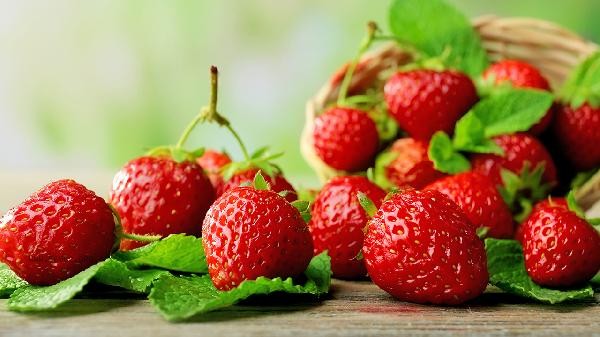
Strawberries can be soaked and cleaned in diluted salt water or baking soda water, and rinsed with running water. When cleaning strawberries, there is no need to use chemical cleaning agents such as dishwashing detergent. The main methods include rinsing with running water, soaking in salt water, soaking in baking soda water, soaking in rice washing water, and using fruit and vegetable cleaning brushes for assistance.
1. Rinse with running water
Place strawberries in a leaky basket and rinse continuously with running water for two minutes. The water pressure helps to flush away surface dust and some pesticide residues. When rinsing, keep the strawberry stem facing upwards to prevent pesticide residues from seeping into the gaps of the fruit flesh with the water flow. This method is suitable for organic strawberries or ready to eat strawberries with clean surfaces.
2. Salt water immersion
Soak strawberries in light salt water with a concentration of 3% for five to eight minutes. Salt can cause some insect larvae to fall off, while also damaging the surface wax layer to make pesticide residues more soluble. After soaking, rinse with running water for more than ten seconds to avoid salt residue affecting the taste. This method is effective in expelling fruit fly eggs.
3. Soak in baking soda water
Add five grams of edible baking soda per liter of water to prepare a weak alkaline solution, soak strawberries for three minutes, and gently stir. Baking soda can neutralize some acidic pesticides and has a significant effect on removing surface fungicide residues. After processing, rinse twice with clean water to prevent alkaline substances from altering the flavor of strawberries.
4. Soaking in Rice Water
Soak strawberries in rice water for eight to ten minutes for the second time, and the starch particles in the rice water have adsorption properties. This method has a certain cleaning effect on fat soluble pesticides, especially suitable for strawberry varieties with white frost on the surface. It should be noted that the rice washing water should be freshly prepared on the same day to avoid fermentation and odor.
5. Fruit and vegetable cleaning brush assistance
Use a soft bristled fruit and vegetable specific cleaning brush to gently brush the concave areas on the surface of strawberries, and with running water rinsing, it can effectively remove dust hidden in the fruit stem area. The movement should be gentle to avoid damaging the skin, and it should be consumed immediately after brushing. This method is suitable for strawberry varieties with hard skin and has a significant cleaning effect on mechanically harvested strawberries. Strawberries should be consumed or refrigerated as soon as possible after cleaning to avoid accelerated spoilage caused by residual moisture. Keeping the fruit stem during cleaning can reduce nutrient loss, and removing the stem before consumption can maintain a better taste. Organic strawberry cultivation can simplify the cleaning steps appropriately, and it is recommended to use a composite cleaning method for large-scale strawberry cultivation. If strawberries are found to have mold spots or softening, even if they are partially spoiled, they should be discarded as a whole, as fungal toxins may have spread throughout the entire fruit. It is recommended to store strawberries in a breathable food box with kitchen paper to absorb moisture, and the storage time should not exceed two days.









Comments (0)
Leave a Comment
No comments yet
Be the first to share your thoughts!