
It is recommended to soak seaweed in cold water for 6-8 hours, and change the water 2-3 times during the soaking process. A small amount of white vinegar or flour can be added to help remove impurities. The foaming effect is mainly affected by factors such as water temperature, time, auxiliary materials, kelp thickness, and water quality.

1. Water temperature control
Soaking in cold water can maximize the retention of water-soluble nutrients such as iodine and mannitol in kelp. Water temperatures exceeding 60 degrees Celsius can cause the dissolution of the kelp's surface gum, affecting its taste. In winter, warm water at around 30 degrees Celsius can be used to shorten the soaking time, but it should not exceed 2 hours.
2. Time management
It takes 4-6 hours for thin sea bands and 8-12 hours for thick kelp, with water changes every 2 hours during this period. Soak until the texture of the kelp is soft and without a hard core. Excessive soaking can lead to kelp erosion, and kelp that is not fully soaked contains indigestible alginate.
3. Auxiliary Material
Adding 5 milliliters of white vinegar per liter of water can neutralize the alkaline substances in kelp and improve its crispness; Adding 1 tablespoon of flour can adsorb the surface mucus and impurities of kelp. Prohibit the use of strong alkaline substances such as baking soda, which can damage vitamin B1 and dietary fiber.
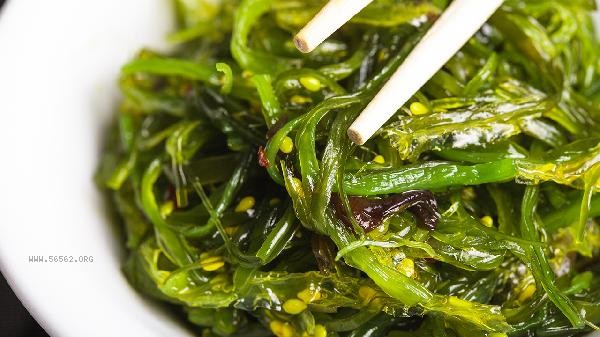
4. Thickness treatment
The salt frost on the surface of dried kelp needs to be washed with running water before soaking. Thick kelp can be cut into 15 centimeter small pieces to accelerate water absorption. Seaweed with roots should be cut longitudinally to avoid hiding sand particles at the roots. After soaking, gently brush the folds with a toothbrush.
5. Water Quality Selection
Mineral water or filtered water has better foaming effect than tap water. It is recommended to boil and cool it before use in hard water areas. It is recommended to use glass or ceramic materials for the foaming container to avoid the reaction between the metal container and the alginate in kelp.
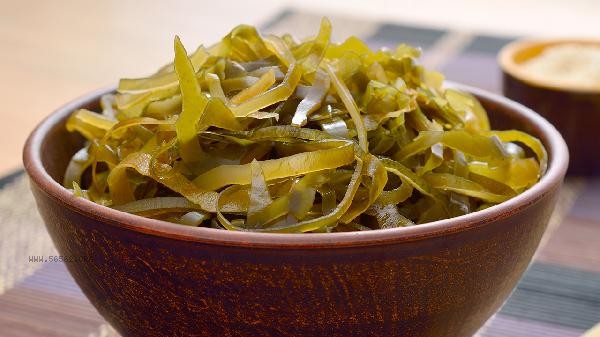
Seaweed that has been soaked is dark brown and elastic, and can be refrigerated for 3 days. Rinse with running water before cooking to remove residual impurities, and it is recommended to blanch in water for 30 seconds to remove fishy odors when mixing cold. Kelp is rich in iodine elements, and patients with thyroid diseases need to control their consumption. It is recommended to consume no more than 50 grams twice a week. If there is abnormal mucus or odor during the soaking process, it should be discarded immediately to avoid gastrointestinal discomfort caused by consuming spoiled seaweed.








Comments (0)
Leave a Comment
No comments yet
Be the first to share your thoughts!