
The key to steaming steamed buns and making dough lies in controlling yeast activity, temperature, and kneading techniques. There are mainly five steps: yeast activation, kneading with warm water, sufficient awakening, exhaust shaping, and secondary awakening.
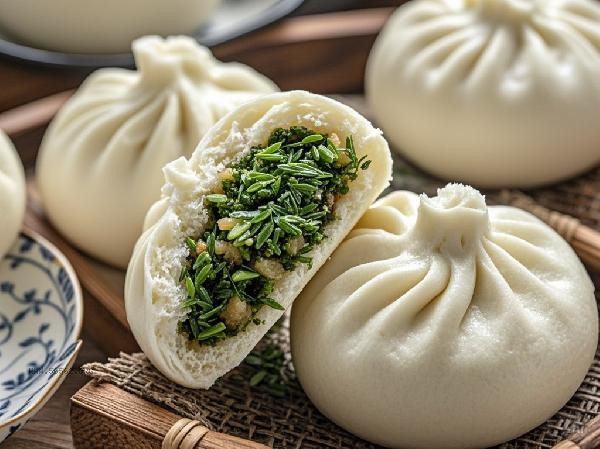
1. Yeast activation
Mix dry yeast with a small amount of white sugar, add warm water at around 35 degrees Celsius, and let it stand for 5 minutes. White sugar can help activate yeast, while warm water above 40 degrees Celsius can kill yeast. A dense foam is observed on the water surface, indicating that the yeast has recovered its activity. At this time, flour can be added for mixing. Warm milk can be used instead of warm water in winter to improve fermentation efficiency.
2. Knead dough with warm water
The ratio of flour to yeast water should be controlled at 2:1, and poured in batches and stirred until flocculent. When kneading dough, keep the water temperature at 30-35 degrees Celsius, and in summer, use normal water directly. Repeatedly knead and press until the dough is smooth and not sticky to the hands, and cut it open to achieve the best state without pores. Adding a small amount of lard or vegetable oil can make the dough softer, but it should be added in the later stage of kneading to avoid affecting the formation of gluten.
III. Fully Awaken
Place the dough in a sealed container and cover it with a damp cloth to prevent drying and cracking. Awaken in an environment of 25-28 degrees Celsius for 1 hour to double the size, and in winter, it can be placed on a warm water pot to accelerate fermentation. The criterion for judgment is that poking a hole with a finger does not rebound, and the interior is honeycomb shaped. Whole wheat flour needs to extend the awakening time to 1.5 hours, as bran can hinder gluten expansion.
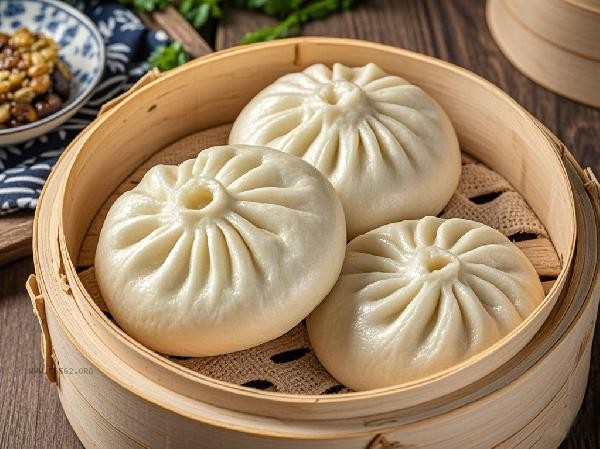
4. Exhaust shaping
The fermented dough needs to be repeatedly kneaded to release air, and this process is called "kneading dough". Rub and press vigorously for 10 minutes until the dough returns to its original size, and cut open without any large bubbles. After dividing the ingredients, roll them into a thick dough with thin edges in the middle, and place the filling with the mouth facing downwards. When the moisture content of the filling is high, the dough can be slightly thicker to prevent skin breakage.
Fifth, Second Awakening
The packaged buns need to be left to stand for 15 minutes before being cooked, which is the key to making the dough soft. Wake up at room temperature in summer, and accelerate in a 40 degree steamer in winter. The judgment standard is that the volume of the steamed bun increases by 1.5 times, and it slowly rebounds when lightly pressed. Steaming in cold water can give the dough a last chance to expand, and after the water boils, turn to medium heat to avoid collapse.
During the dough making process, attention should be paid to the stability of the ambient temperature to avoid drafts that may cause the dough surface to dry and harden. When fermenting old noodles, it is necessary to use edible alkali to neutralize the sour taste, with a ratio of about 100 grams of old noodles to 1 gram of alkali. The water absorption rate of different flours varies greatly, and it is recommended to reserve 10% water for adjustment. After steaming the baozi, turn off the heat and let it simmer for 3 minutes before opening the lid to prevent it from suddenly shrinking when it gets cold. Part of the dough that can be frozen and stored in daily use can be thawed and re kneaded to quickly make fresh buns.








Comments (0)
Leave a Comment
No comments yet
Be the first to share your thoughts!